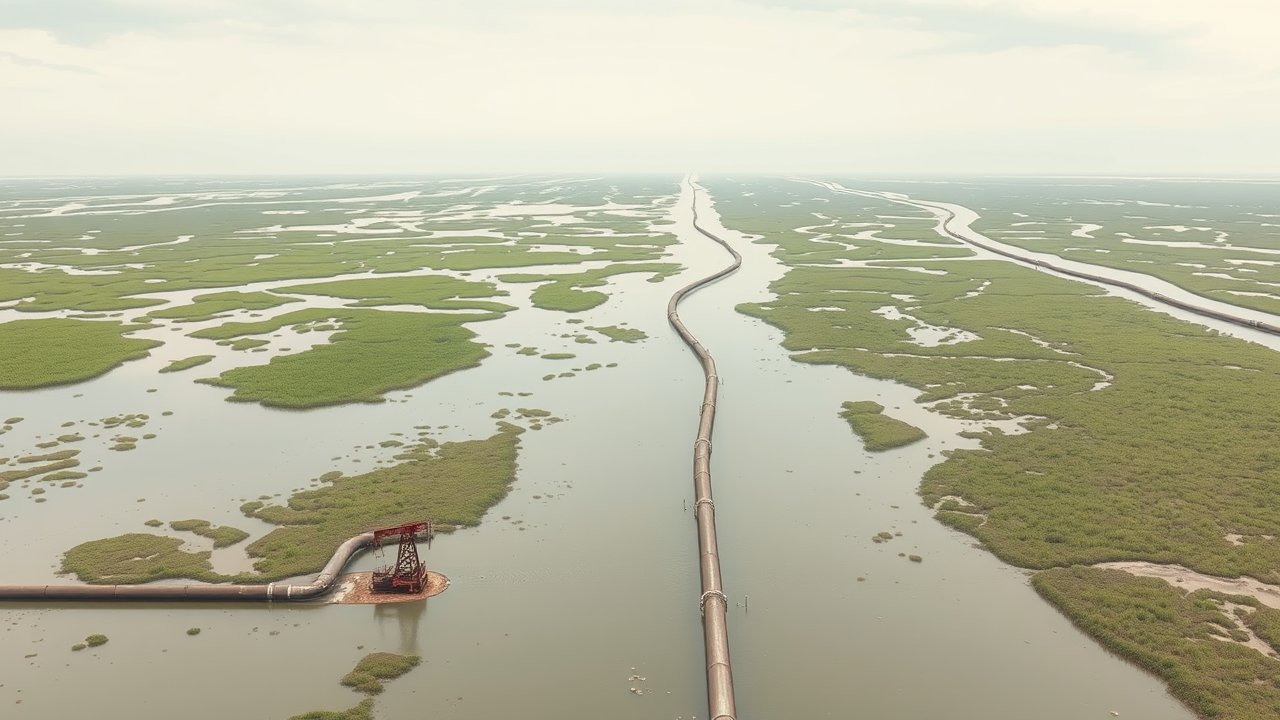
In an 8-0 decision, the Supreme Court sided with Chevron and other energy companies Friday, ruling they can transfer a coastal damage lawsuit from Louisiana state courts to the federal system, according to SCOTUSblog. Justice Samuel Alito sat out the case due to stock ownership in one of the defendant companies.
The dispute traces back over a decade, when several Louisiana parishes sued oil companies whose predecessors extracted crude oil along the coast during World War II. The parishes claim these operations violated state environmental laws and caused lasting damage to coastal areas. They're seeking restoration costs and damages, arguing the companies failed to follow proper permitting procedures and industry practices before 1980.
The oil companies have fought to move the case to federal court under the "federal officer removal statute," which allows cases involving people acting under federal authority to be heard in federal courts. Chevron argued that two predecessor companies operated as federal contractors during the war, producing aviation gasoline for the military effort, which required them to refine crude oil extracted from Louisiana's coastal fields.
Justice Clarence Thomas wrote in the court's 12-page opinion that the lawsuit meets the statute's requirement of "relating to" federal duties. He noted that much of the crude oil Chevron produced from the disputed field was ultimately used for wartime aviation fuel refining. The phrase "relating to" sweeps broadly, Thomas wrote, though it requires a connection that is "not tenuous, remote, or peripheral." Justice Ketanji Brown Jackson agreed with the outcome but wrote separately, arguing the statute requires a direct cause-and-effect relationship between federal duties and the challenged conduct.
The Fifth Circuit Court of Appeals had previously ruled that while the companies were "acting under" federal officers, the parishes' lawsuit didn't sufficiently relate to those federal duties. The appellate court reasoned that the companies' contracts gave them latitude to purchase crude oil on the open market rather than produce it themselves. The Supreme Court's reversal sends the case back to federal court, where it will proceed on the merits.