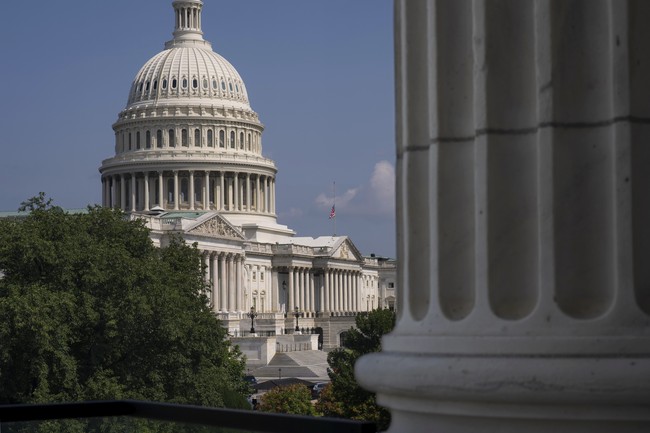
The Federal Election Commission's electronic filing system came back online at 4:50 p.m. Eastern on Wednesday, October 28, after being down since about 10 p.m. Monday, according to the agency's own status page. For nearly two days, super PACs, party committees and campaigns could not submit the 24-hour and 48-hour reports that disclose late spending and large contributions in the final stretch before the November 3 midterms. In public, the FEC has said only that the system was offline and that staff were restoring it. The explanation that someone tried to break in comes from an email an FEC electronic filings officer sent to campaign compliance firms on Monday night, which Reuters reviewed, and from an unnamed person who described the agency's internal investigation to Politico. The agency has not said who was responsible or whether any data was reached.
One campaign finance watchdog called the outage "pretty devastating this close to the election." The FEC, for its part, told filers it would not fine anyone who files within 24 hours of the system's return, though for now it cannot fine anyone in any case: a fine requires four commissioners to find "reason to believe" a committee filed late, and the commission has had only two members since October 2025. A cybersecurity specialist told Reuters that taking the system offline was the right call when dealing with an attack.
What the FEC said, and what came from its emails
The FEC's status page opened an incident at 10:15 p.m. Monday ("We are currently investigating this issue") and listed online web forms, the electronic filing submission system and vendor filing tools as affected. At 8:17 p.m. Tuesday it said "the issue has been identified and a fix is being implemented," and at 4:50 p.m. Wednesday that "the electronic filing system is available." As of Friday morning the incident was still marked as being monitored, not resolved, and the page had posted nothing since Wednesday evening. On X, the FEC said Wednesday the system was "back online and available to filers." A spokesperson told the Daily Caller the agency could "point to the status update," said "the website search for FEC reports is not affected," and declined to give further details. Other notices did not fully match that: a notification email obtained by Nextgov/FCW listed "various filing search features" among the systems that remained offline, and the FEC's Wednesday post said work was continuing to restore the filing system's search feature and its notification service. The agency has not said which searches were affected. By Friday morning the status page showed every service it tracks as operational, but none of its outage updates had mentioned the search feature or the notification service, and it had not said either was restored.
None of the agency's public statements uses the word "breach." "We have a bad actor attempting to breach FEC systems. As a result, we've had to temporarily shut down our web facing services," the filings officer wrote to several compliance firms on Monday night. According to an email reviewed by Reuters, campaign finance managers had to reset their passwords before logging in to the system. A person familiar with the situation, granted anonymity by Politico to discuss an ongoing internal investigation, said FEC cybersecurity staff "noticed attempted intrusions and were able to shut down" the parts of the system under attack. That person called the attempt "quite narrow and compartmentalized" and said "no one really knows" who was behind it. The email came from FEC staff; Politico describes its source only as familiar with the situation. Both accounts describe the agency's review of its own systems, and no one outside the agency has said whether anyone got in or whether any records were altered. The Cybersecurity and Infrastructure Security Agency and the FBI referred questions to the FEC, and the FEC did not return Reuters' requests for comment on Wednesday or announce any details on the cause.
What went unreported
Under FEC rules, PACs, party committees and others whose independent expenditures in a race reach $1,000 or more between October 15 and November 1 must report them within 24 hours. Campaigns must disclose within 48 hours any contribution of $1,000 or more received between October 15 and 31. The FEC's public feed of new electronic filings shows the last 24-hour report arriving at 9:54 p.m. Monday. Between then and 4:41 p.m. Wednesday, only five filings of any kind were posted, and none was a 24-hour report or 48-hour notice. In the seven hours after the system returned, 225 new 24-hour reports and 339 new 48-hour notices were posted. That is more 24-hour reports than on any full day since at least October 22, the earliest date in the feed.
"We didn't have access to the last-minute spending, which is really ramped up as the election draws nearer," Molly White, who tracks crypto and technology-industry political spending, told Reuters. The timing and the FEC's silence "stirred up conspiracy theories throughout the industry, several people said," Reuters reported. White noted that an outage like this would be a good way for unscrupulous actors to hide unpopular last-minute spending, but added: "It's hard to say with any real information that that's what happened." Brendan Glavin, research director at OpenSecrets, said super PACs and dark money groups had spent an average of more than $50 million a day in the week before the outage, and that more than $250 million was reported on October 20 alone.
Kyle Sandy, cybersecurity director at the security firm Logically, said shutting down was the right call. "It tells me the FEC detected something they couldn't immediately scope and chose a known outage over an unknown risk," he told Reuters, adding that it gave the agency time to make sure none of its data had been altered. An automated FEC email obtained by Politico said the agency would not fine campaigns for missed filings "so long as they file within 24 hours after the electronic filing system is back online."
Context
The FEC collects and publishes campaign finance reports; it has no role in running elections or counting votes. The outage hit an agency that, according to CNBC, has had only two of its six commissioners since October 2025 and has lacked the four it needs to take official action since May 2025; career staff have kept processing disclosures. The same status page records an earlier incident: from August 17 to August 19, FECfile+, the agency's web-based filing application, was offline while staff investigated "a potential FECfile+ security vulnerability." The FEC has not said whether the two incidents are related. Its security record bears on how much weight its own account can carry. In 2025 the agency's inspector general, its internal watchdog, reported that an outside auditor found the FEC's security policies "generally effective" but its controls "not sufficient to reduce the risk of potential security breaches to an acceptable level," citing old systems the agency cannot patch quickly and "significant budget and resource constraints for several years"; as of March 31, 2026, all ten of that audit's recommendations were still open. During the 2013 government shutdown, Chinese hackers "infiltrated the FEC's IT systems," the Center for Public Integrity reported; the Department of Homeland Security said then that there were no indications sensitive or personal data had been compromised. What remains unknown is who was behind the attempt the filings officer described, whether any data was reached, and whether every report delayed by the outage has now been filed. The 24-hour reporting period runs through Sunday, November 1.
This article reflects reporting through the morning of Friday, October 30, 2026. Sources: the FEC status page; the FEC's electronic filing feed; FEC, "Last-minute disclosure periods reminder", October 13; Reuters, October 27 (via NBC News) and October 28; Politico, October 27; The Hill, October 28; Daily Caller, October 27; Nextgov/FCW, October 28; CNBC, October 28; the FEC Office of Inspector General's semiannual reports to Congress for April-September 2025 and October 2025-March 2026; the FEC's administrative fines page and 52 U.S.C. § 30109; the Center for Public Integrity, December 2013, and Fox News, December 19, 2013.