Mexico's president, Claudia Sheinbaum, said on Wednesday, October 28, that her government and the United States are "seeing whether it is feasible to reach an agreement before the U.S. elections" on November 3, and that whatever the result, "we will keep working with the United States," La Jornada reported. The deal under discussion is not a renewal of the three-country USMCA pact, which Washington declined to extend on July 1, but an interim exchange of U.S. tariff relief for Mexican concessions on what Reuters described as "Washington's concerns over issues including automotive content and Chinese investment," and the tariffs Mexico cares most about, 25 percent on cars and 50 percent on steel and aluminum, were still unresolved, Reuters reported. There is no formal deadline, Reuters said; officials in both countries have said they hope for a deal before the midterms.
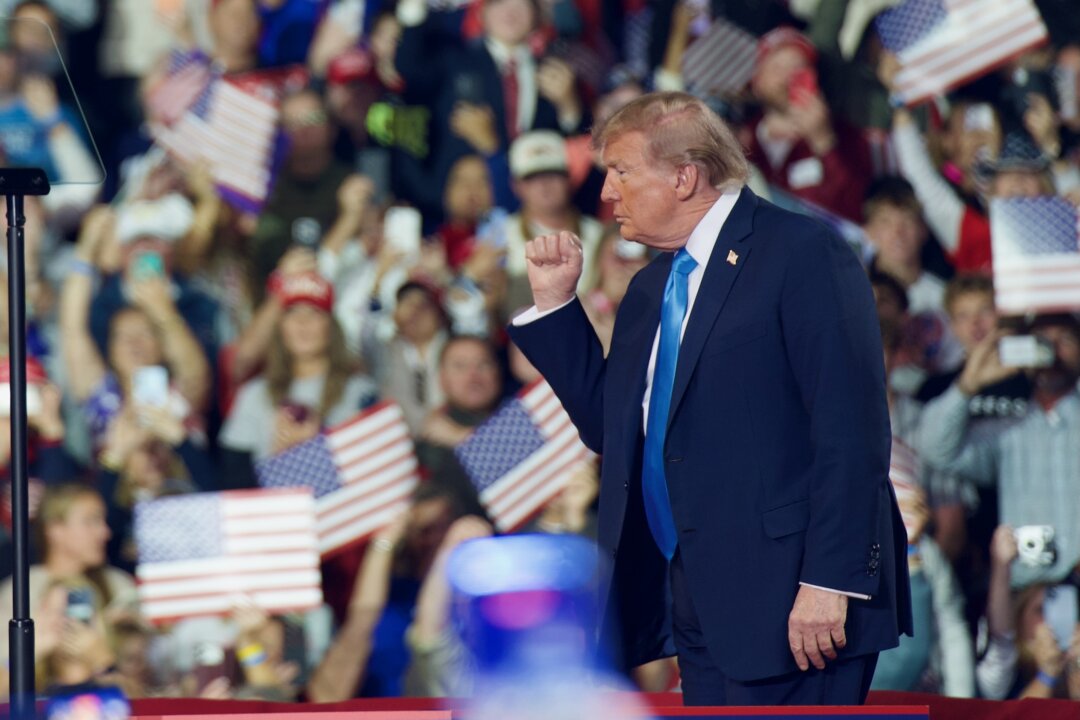
President Trump told a Kansas rally on October 19 that "Mexico and us are very close to a great deal." Asked on October 28 about Trump's statements that the talks were near conclusion, Sheinbaum said his electoral context should also be taken into account, El Universal reported, and added: "We will wait; as always, we have to have a great deal of patience and serenity in this" (Profoundd's translation). Mexico's economy secretary, Marcelo Ebrard, said on October 27 that decisions on steel and aluminum would probably come after the election, Infobae reported. On Canada, White House economic adviser Kevin Hassett said on October 25 that the two countries were "very close to finally having a deal"; a spokesperson for Canada's trade minister said only that Canada "remains in constructive dialogue with our U.S. counterparts," and a person close to the talks told Semafor that "there is always the possibility of a deal if positions change."
What was decided on July 1, and what was not
The USMCA required its three governments to hold a joint review on July 1, 2026, and say whether they wanted to extend it for another 16 years. Mexico and Canada asked for the extension. The U.S. Trade Representative, Jamieson Greer, said that day: "The United States did not agree to renew the USMCA in its current form. As a result, the USMCA is not renewed." The agreement "remains in force pending resolution of these issues or until the Agreement's termination," he said; it now faces annual reviews and expires in 2036 unless all three agree to extend it. Canada's minister for U.S. trade, Dominic LeBlanc, said the same day that he had "reaffirmed Canada's unwavering support for the CUSMA and its renewal." Three weeks later Greer told the Senate Finance Committee what he wanted instead: "I would love to have by the end of the year at least some arrangements — one with Canada, one with Mexico," with rules of origin, labor and environment "in the following year," Reuters reported. Michael Camunez of Monarch Global Strategies, a consultancy on business in Mexico, told Reuters the likely outcome was "an interim political agreement that keeps negotiations moving but leaves the hardest issues — and much of the investment uncertainty — unresolved."
The Mexico track: close, by both accounts, but not on the tariffs
Mexico's stated goal has not changed in October. "What Mexico is seeking is the reduction of tariffs derived from Section 232, specifically for the automotive industry, steel and aluminum," Ebrard said on October 20, referring to the national-security tariffs the Trump administration set in 2025 at 25 percent on autos and 50 percent on steel and aluminum. On October 28, Sheinbaum said the non-tariff matters Washington had raised were "practically" resolved, that Ebrard had spoken with Commerce Secretary Howard Lutnick, and that "we want a significant reduction in the tariffs of the so-called 232, which is automobiles and steel and aluminum," El Universal reported. "We have not yet reached what we consider important for Mexico, but there is very good progress," she said, adding that Mexico had negotiated "without ceding sovereignty." Sheinbaum said on October 20 that the United States had made "proposals," offering to reduce a certain tariff in exchange for Mexico doing "A, B, C, D," and that "there is a very good attitude from the United States government on this subject," from both Lutnick and Greer, Mexico News Daily reported. Trump, for his part, has spoken about the deficit: "We're not going to lose $150 billion with Mexico anymore!" he told the Kansas rally; the goods deficit was $155.9 billion from January through August, up 21.2 percent from 2025, per Census Bureau figures cited by American Ag Network. In Lubbock, Texas, on October 27, Trump said companies cannot build cars in Mexico or Canada and ship them back without paying tariffs, Infobae and Agencia Reforma reported.
Two accounts of the pace exist. The Wall Street Journal reported on October 15, citing people familiar with the talks, that progress had stalled because Lutnick opposed "significant reductions in the 25% tariff on Mexican automobiles and the 50% levies on steel and aluminum," Reuters reported. Mexico's deputy trade minister, Luis Rosendo Gutiérrez, told the Journal there was progress, and a Commerce Department spokesperson told the newspaper the department was in constant dialogue with Mexico on trade. The Journal also reported that Mexico had already agreed to suspend for five years the 10 percent tariff it applied to imported parts and components for vehicle assembly, Mexico News Daily reported. Mexican industry is planning for talks past the election: Alejandro Malagón, president of the industrial chambers' confederation Concamin, said at a foreign-trade congress in Monterrey, La Jornada reported on Thursday, that the conversations would continue in the middle of next week, that the topics to be taken up in the 2027 review were expected to be agreed then, and that although industry had hoped the tariffs would be eliminated, it "will have to coexist with them for a time," La Jornada reported.
The Canada track: "very close," or not
U.S.-Canada talks collapsed on August 21-22. Greer wrote that "Canada declined to finalize the trade deal under the terms agreed earlier this week"; Prime Minister Mark Carney said the United States "asked too much and offered too little," and that last-minute U.S. demands would "destroy" Canada's auto, steel and aluminum industries and restrict Canada's ability to sign trade deals with other countries, CNBC and CBC reported. The U.S. imposed 50 percent tariffs on about $20 billion of Canadian goods and later import bans on Canadian alcohol, motorcycles and dairy, Reuters reported; Canada retaliated on September 8. Last weekend both governments described renewed contact, in different words. Hassett said on Fox News that Lutnick had been speaking with Canadian counterparts all week and that talks were "gathering steam." CTV News, citing unnamed government and industry sources, reported weekend talks that two sources described as "all consuming" and said the sources saw White House appetite for a deal tied to Trump's standing before the midterms, while cautioning that an agreement "was far from certain." At a Michigan rally on Sunday, October 25, Trump said: "Canada has been ripping off the United States for years. We'll have that settled really soon; they're willing to give us anything at this moment," CTV reported. Two days earlier, on Friday, October 23, the White House had announced it would "remove some tariffs on Canada, adding less consequential ones," a step CTV described as "a bid to boost embattled Republican Senator Susan Collins' campaign for re-election"; Collins took credit for the changes. Carney said that Friday: "We're ready to drop everything, sit down, and negotiate this afternoon if the Americans are ready in good faith."
What an interim deal would and would not do
In a commentary published by the Center for Strategic and International Studies in September, Diego Marroquín Bitar, a fellow in the center's Americas Program, and Juan Carlos Baker Pineda, a resident fellow at the Georgetown Americas Institute and one of the architects of the original USMCA, wrote that the administration's recent "agreements on reciprocal trade" with Argentina, South Korea and Japan are not submitted to Congress and are implemented by executive action, that "neither of these agreements would amount to the renewal of the USMCA," and that "what Mexico concedes for tariff relief in a stopgap deal could become the baseline for Canada." LeBlanc said in March that Canada was not concerned Mexico would sign a deal excluding it, and that bilateral agreements on two-country issues could sit alongside a trilateral framework both countries still wanted. Ebrard measures the outcome differently: Mexico "today has the best treatment, objectively, because it pays the lowest tariff, and is the largest exporter to the United States," he said on October 20.
The Mexican presidency had not posted transcripts of the October 28 or 29 press conferences as of 15:47 UTC on October 30; Sheinbaum's remarks above are as reported by La Jornada, El Universal, Infobae and Reuters.
This article reflects reporting through the morning of Friday, October 30, 2026. Sources: the Office of the U.S. Trade Representative, July 1; Global Affairs Canada, July 1; Reuters via Yahoo Finance, October 28, via Yahoo News, October 15, and via AJOT and the Galveston Daily News, July 22; La Jornada, October 29; El Universal, October 28; Infobae, October 28; Agencia Reforma via Diario; Nación321, October 20; Mexico News Daily, October 20 and October 16; American Ag Network, October 21; CSIS, September 21; Investing.com via Yahoo Finance, October 25; CTV News via BNN Bloomberg, October 25; Semafor, October 26; CNBC, August 22; CBC News, August 24; The Globe and Mail, March 30. Spanish-language sources were read in Spanish; translations are Profoundd's.