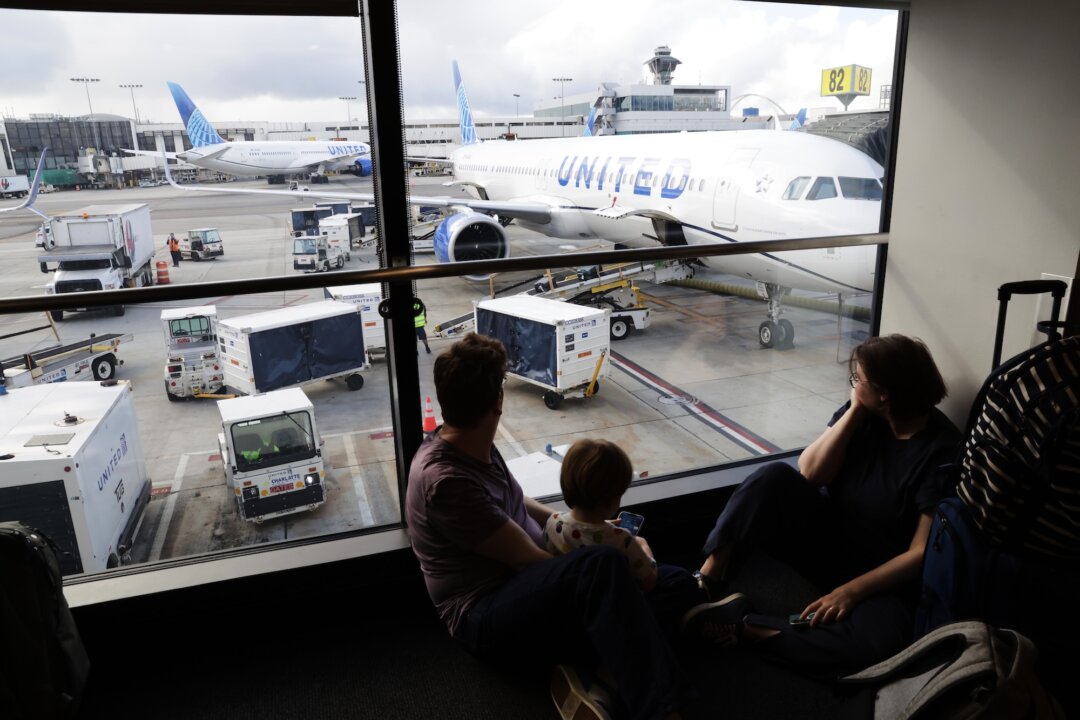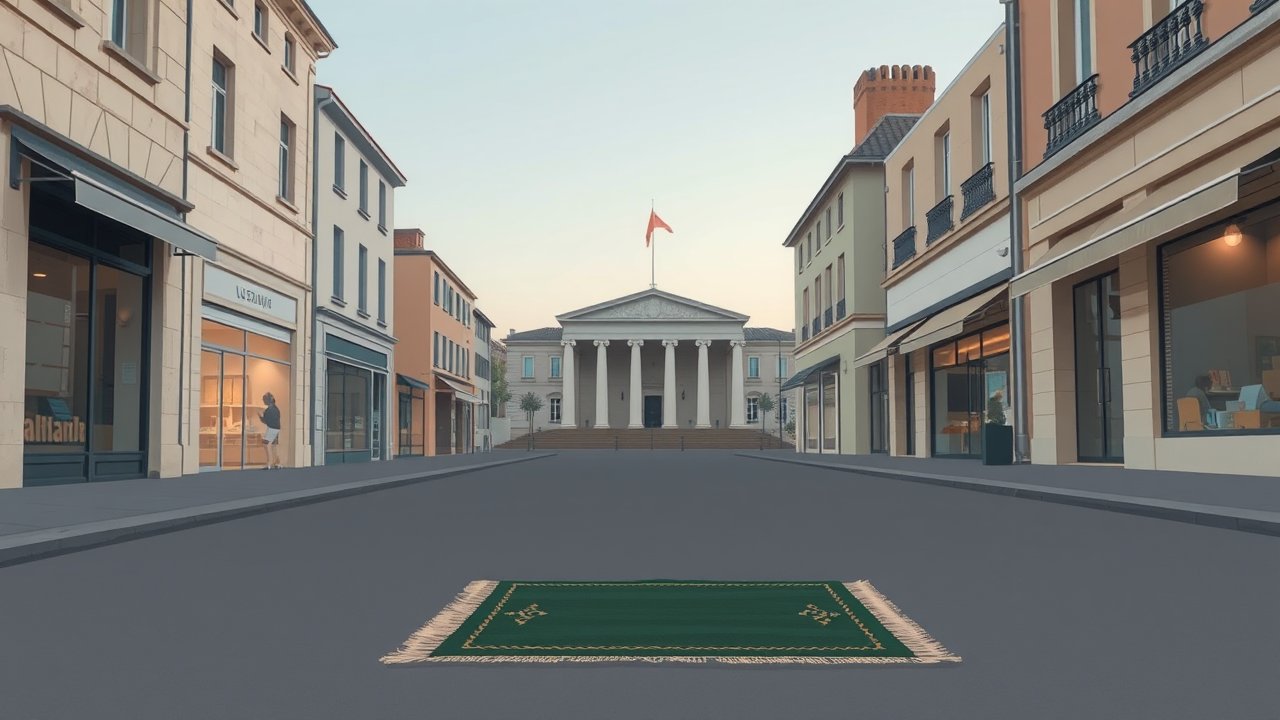
A video of a man praying on a mat outside a fast-food restaurant has spread on X since Nov. 3. It is shared as a clash over public prayer. Where and when it was filmed is not known. France has argued over public prayer for years.
What French rules say
France's 1905 law "guarantees the free exercise of worship," limited only "in the interest of public order." In 2011, Interior Minister Claude Guéant banned prayer in the street. "It contravenes our principle of secularism," he said. Marine Le Pen of the National Front had compared it to the war years. "It's an occupation all the same and it's hard for the locals," she said. Al Jazeera wrote that the ban showed France's "problems assimilating" Muslims, who lacked "prayer space."
In 2020, President Emmanuel Macron said "the problem is Islamist separatism." He called it a "politico-religious project" that often builds "a counter-society." He also said France let ghettos form. The 2021 law he announced lets officials shut places of worship that stir "hatred or violence."
The case critics make
In 2025, 8 million immigrants lived in France, 11.6% of its people, says INSEE, the statistics agency. That January, then-Prime Minister François Bayrou said foreign arrivals "are positive for a people, on condition that they do not exceed a proportion." Past it, people feel "a submersion" and "rejection," he said. "We are approaching that threshold," and "a number of towns or regions" already feel it. Assembly Speaker Yaël Braun-Pivet said she "would never have said" that, though France must "regulate immigration." In an online Elabe poll that week, 67% said there is a "migratory submersion" in France.
The polling firm Ifop counts Muslims at 7% of people 15 and older, up from 0.5% in 1985. Ifop's 2025 phone survey, for the magazine Écran de Veille, reached 1,005 Muslims from a sample of 14,244, Aug. 8 to Sept. 2. Of them, 62% said they pray daily, up from 41% in 1989. Among those under 25, it was 67%, up from 26%. Older figures come from earlier surveys, and Ifop notes that some past surveys counted Muslims more broadly.
Ifop wrote that its data back those who fear a Muslim "counter-society." That trend "seems instead to be strengthening generation after generation." Badly asked questions end up "manufacturing the fears" they claim to measure, said Chems-eddine Hafiz, head of the Grand Mosque of Paris.
Patrick Simon helps run TeO, a large public survey of immigrants and their children. He said it found Muslims' tie to faith "stable" from 2008 to 2020. The young, he said, grow less religious with age. Ifop's François Kraus replied that TeO's own data show the veil rising from 18% to 26% of women aged 18 to 49.
On issues like ritual slaughter or inheritance, 44% would follow their religion's rules, up 16 points since 1995, and 49% French law, down 13 points. And 46% said Islamic law must apply where they live: 15% "fully, whatever the country," and 31% "in part," adapted to local rules. Simon said slaughter rules can be followed "without necessarily thinking of breaking" health rules. Of Islamic law, researcher Vincent Tiberj asked: "Cutting off thieves' hands? That's not very serious."
Political Islam
In May 2025, then-Interior Minister Bruno Retailleau said the Muslim Brotherhood's "ultimate goal" is "to tip all of French society into Sharia." A government report that month called the federation Musulmans de France the Brotherhood's French branch. It found "no recent document" showing the federation wants an Islamic state or Sharia in France. The federation called the charges "unfounded." But the report warned of "a threat to national cohesion" from Islamism in towns, which it said has "growing effects in public space." It said the Brotherhood seeks to change "local or national rules" over time.
Profoundd's check this week
On Nov. 10, Profoundd checked whether Muslims bring Sharia once they hold power. It rated it "mostly true" over time. Pakistan, Egypt and Bangladesh added Islamic law over 10 to 40 years. Turkey, Azerbaijan and Kazakhstan kept secular law. On faith, India, most of the Balkans and Spain did not follow the pattern. In the West, it found Muslims at "the early steps," citing U.S. cases.
What comes next
In TeO's 2019-20 data, children of two immigrants fast about as often as immigrants who came as adults. Among believers of every faith and origin, it was 68% to 66%. Simon expects more mixed families, where about half the young have no religion. Kraus says the survey suggests "nothing seems to halt" Muslims' return to religion.
Reporting through Thursday, November 12, 2026. Quotes from French sources are Profoundd's translations. Sources: Élysée, Macron speech on separatism, Oct. 2, 2020; Conseil d'État, Jean-Marc Sauvé on the 1905 law, Oct. 11, 2017; Law No. 2021-1109, Journal officiel, Aug. 25, 2021; The Local, Sept. 15, 2011; Al Jazeera, Sept. 16, 2011; INSEE on immigrants, June 25, 2026; LCP, Jan. 28, 2025; Elabe for BFMTV, Jan. 29, 2025; Europe 1, Jan. 28, 2025; Ifop for Écran de Veille, Nov. 18, 2025; The Conversation, with Ifop's reply, Nov. 26, 2025; Hespress (AFP), Nov. 25, 2025; Public Sénat, May 20, 2025; Interior Ministry report on the Muslim Brotherhood, May 2025; Europe 1, May 21, 2025; INSEE, religion in the TeO2 survey.