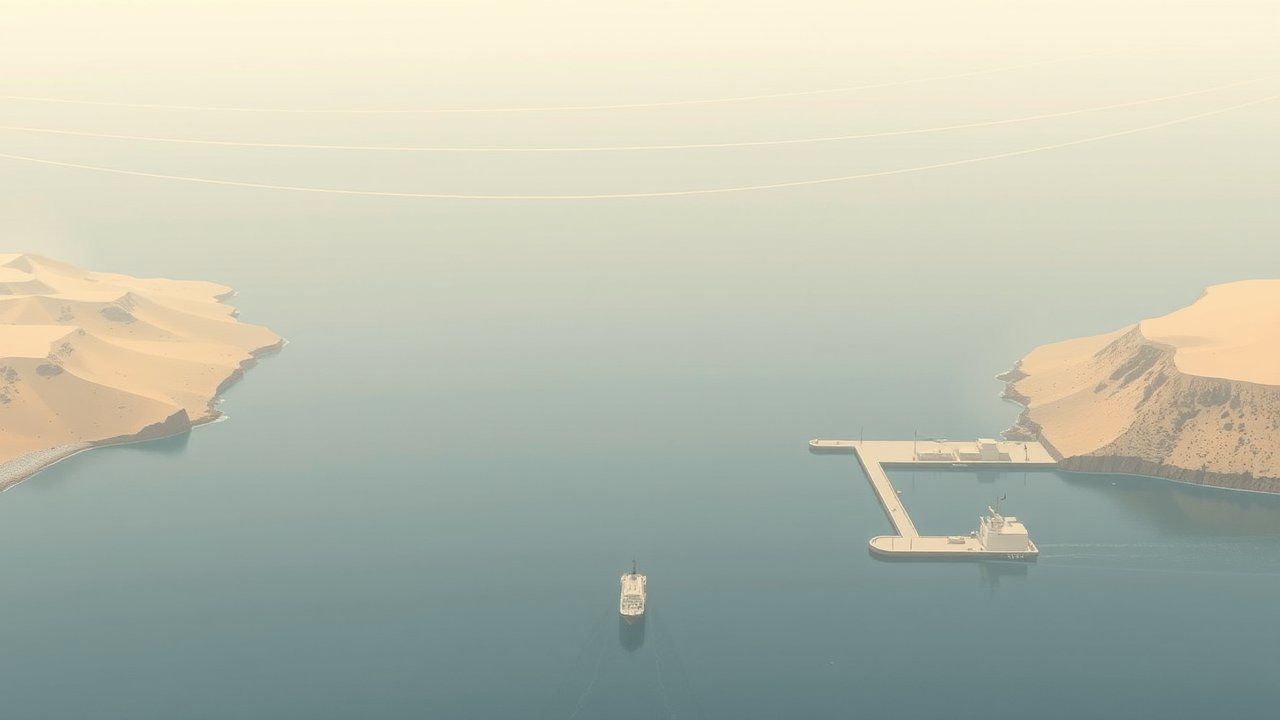
Yemen's Saudi-backed government says its forces have retaken the Bab el-Mandeb strait, the narrow southern entrance to the Red Sea, along with the port city of Mocha, from the Houthi movement that seized them in September. The Houthis dispute it: a Houthi military spokesman said on Tuesday that the group still holds its gains and called its opponents' reports "fabricated heroics." Neither Al Jazeera nor The National has been able to independently verify the government's claims.
At the same time, Saudi Arabia, Turkey and Pakistan have activated their new mutual-defence pact, the Mecca Alliance for Defence, for the first time since signing it on August 7. Like NATO's founding treaty, it treats an attack on one member as an attack on all three.
The offensive
The government announced its operation, which it calls Yemen Dawn, on Sunday, October 4. Rashad al-Alimi, who heads the Presidential Leadership Council that governs Yemen's south and east from Aden, says its aim is to retake all Houthi-held territory, including the capital, Sanaa, which the Houthis have held since 2014. A Saudi-led coalition is providing air support with 100 fighter jets, and its spokesman, Maj. Gen. Turki al-Maliki, says 324 "high-value" Houthi targets have been destroyed.
The government's military spokesman, Col. Majed al-Nuzaili, says the Giants Brigades and Nation's Shield Forces took "effective control" of the strait in a flanking move, captured the airport at Dhubab overlooking it, and surrounded hundreds of Houthi fighters there, some of whom fled by boat. Four government sources told Reuters that troops reached the outskirts of Mocha on Monday as Houthi fighters pulled back toward the highlands; the Defence Ministry later said the city had fallen. "This will be a vital sign for us if the Yemeni government forces, led by the Southern Giants and other southern forces, can hold this city," said Fernando Carvajal, a former adviser on Yemen to the United Nations Security Council, noting that Mocha is surrounded by Houthi forces on three sides.
The strait is a key shipping route between the Mediterranean and Asia, and it has become even more important this year because the Iran war has effectively closed the Strait of Hormuz. A truce agreed in 2022 had largely held until this summer.
The Mecca pact and the attacks on Saudi Arabia
The pact was activated on Monday after an emergency meeting of the three countries' defence and foreign ministers in Riyadh. "The committee agreed to activate collective deterrence measures, within the framework of the Alliance, in response to the attacks and all those responsible for them," Saudi Defence Minister Khalid bin Salman wrote. A joint statement from Pakistan's Foreign Ministry said the three would "provide the agreed military forces and capabilities and ensure their rapid deployment" to Saudi Arabia. Profoundd found no report that Turkish or Pakistani forces had arrived as of October 6. Analysts had said Turkey and Pakistan were reluctant to act because of their roles as mediators in the U.S.-Israel war on Iran.
The Houthis have stepped up attacks on Saudi Arabia. Houthi-affiliated media say the group fired missiles and drones at airports in Riyadh, Abha, Jazan and Najran, an Aramco refinery at Rabigh and the Khamis Mushait air base. Saudi Arabia has not commented on most of those claims, but its civil aviation authority said the Jazan and Najran airports were hit on Monday evening, causing three minor injuries. U.S. Secretary of State Marco Rubio backed Riyadh: "Obviously the Saudis have come under Houthi attack and see the threat that that poses, and they have a right to defend themselves."
The cost
The World Health Organization says the latest fighting has killed at least 959 people and wounded more than 4,200, and the International Organization for Migration says more than 184,000 people have been displaced since the war resumed. The Houthi-run health ministry says coalition air strikes near Sanaa killed a woman on a farm and a girl in a car.
Sources: Al Jazeera, with the Associated Press and Reuters, October 5 and 6, 2026; The National, October 5, 2026.