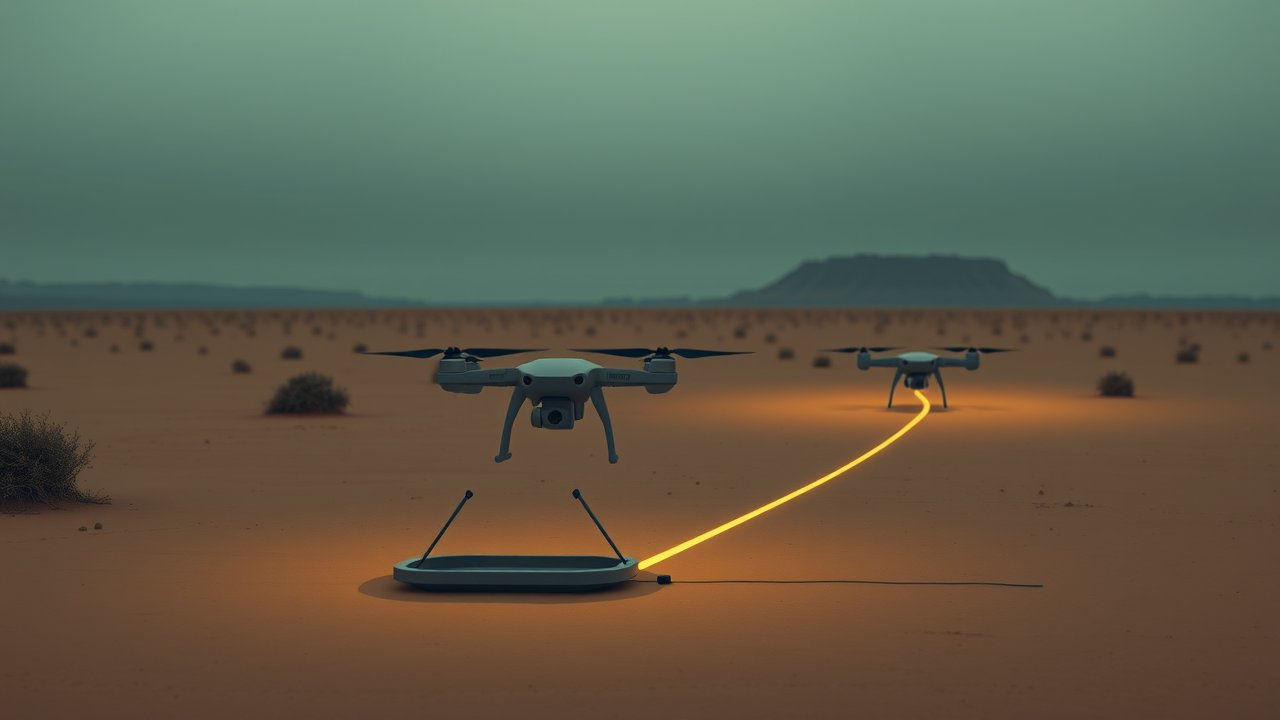
The U.S. Border Patrol is asking companies about "Drone as a First Responder" systems. The drones wait in boxes called docks and launch on a sensor alert or "manual user command." Its parent agency, U.S. Customs and Border Protection (CBP), posted the notice Nov. 6. It is market research. CBP "does not intend to award a contract" from it, but answers may shape a future purchase. Company responses are due Dec. 18. The notice names no budget.
What Border Patrol asked for
The notice asks for AI that finds and tracks "items of interest" on its own. Those are people suspected of crossing illegally, vehicles in remote areas, and smuggled goods. Its top goal is alerts "without requiring manual video monitoring or operator input." It also asks how a person could oversee the drones or take "manual override." Cameras should read a license plate 100 yards away.
Drones Border Patrol flies now
Agents already fly small drones. In August, a Homeland Security watchdog audit found they gave agents "rapid air support." It found them more "cost-effective" than helicopters, fixed cameras or towers. But half the fleet was at or near the end of its life. Agents told auditors they lacked night cameras and tools to mark a target, which the notice asks for.
Quinn Palmer, CBP's small-drone operations director, said in 2024 that drones flew about 20% of air-support missions in 2023. Those flights yielded 48% of air-supported arrests and seizures, he said, about 42,000 arrests. He cited $50 million in "cost avoidance" from using drones instead of crewed aircraft. The audit, though, found Border Patrol "cannot fully and accurately track" mission results.
The case for
Palmer said in 2023 that success is best measured by agents' safety. CBP's 2022 strategy says the goal is to watch more border "without reducing agent availability" to respond. Three Democratic Texas state senators have proposed a "smart wall," DroneLife reported in September. It would use cameras, sensors, radar and drones, not just a barrier. Chad Wolf was acting homeland security secretary in Trump's first term. He wrote in 2025 that "autonomous drones provide additional manpower." Fewer than 20,000 agents guard 7,500 miles of border, he wrote, and cartels already use AI and drones. His consulting firm says he sits on an advisory board for "a leading American drone manufacturer." The audit found technical failures kept some small drones out of service, "sometimes for extended periods."
The concerns
Dave Maass works for the Electronic Frontier Foundation, a digital-rights group. In May he said AI border towers collect data on people who live at the border. "Living at the border is not a crime," he said. CBP's 2024 privacy review says its small drones point cameras "toward the border and away from communities" when they can.
EFF lawyer Jennifer Lynch said CBP has never stopped flying drones for other agencies. Records obtained by 404 Media show at least 50 flights for ICE in one year. In June 2025, CBP flew Predator drones over Los Angeles protests. It said they were for "officer safety surveillance." The notice covers the border "between the designated ports of entry." But it would also send data to "law enforcement partner systems." CBP's privacy review says requests for drone support need a sector chief's approval.
Maass also said AI flags can get people stopped or detained. In 2025, the AP found that a Border Patrol program flagging drivers by algorithm led to stops, searches and some arrests. CBP said the program follows "a stringent, multi-layered policy framework." The notice asks for "true positive and false alarm rates" but sets no limit. CBP's 2022 strategy says AI should alert an agent, "who is required to determine the need for a law-enforcement response."
Reporting through Thursday, November 12, 2026. Sources: CBP, SAM.gov notice and attachments, Nov. 6, 2026; DHS inspector general, OIG-26-24, Aug. 20, 2026; Federal News Network, March 15, 2024; Inside Unmanned Systems, Nov. 2, 2023; CBP autonomy strategy, June 2022; Washington Examiner, May 6, 2025; American Global Strategies, read Nov. 12, 2026; DroneLife, Sept. 9, 2026; AZFamily, May 7, 2026; DHS privacy review, May 2024; 404 Media, Sept. 23, 2025; Associated Press, Nov. 21, 2025.