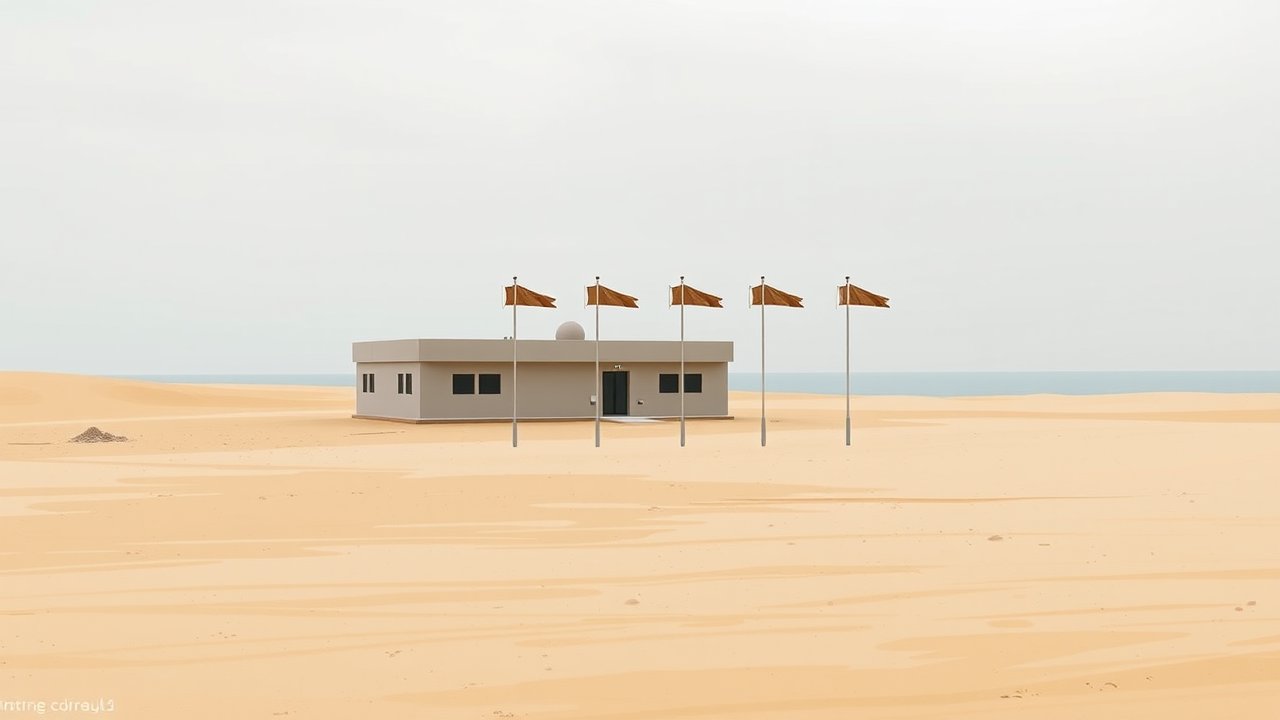
Defense ministers of the six Gulf Cooperation Council states agreed on Nov. 10 to open a forward military command in Kuwait. A forward command is a headquarters placed closer to likely threats. It will be part of the GCC's Unified Military Command, based in Riyadh, Saudi Arabia.
The ministers "approved" the command and assigning "appropriate forces" to it, the bloc said. It did not say how many troops, which units, where in Kuwait, or when it opens.
Why Kuwait, and why now
The U.S. and Israel went to war with Iran on Feb. 28. Since then, Gulf states, most of which host big U.S. bases, have faced Iranian missiles and drones, Reuters reported. Iran says it targets U.S. forces there. Kuwait borders Iraq and faces Iran across the Gulf. ACLED, a conflict tracker, counted at least 172 attacks on non-military sites in GCC states from Feb. 28 to July 30, by Iran and Iran-backed groups in Iraq. The UAE took 49 (28%) and Kuwait 43 (25%). ACLED said such sites drew about 18% of Iran's land attacks on GCC states. The rest hit military or other targets. Gulf leaders ordered closer defense ties at a summit in April.
Each side in its own words
Jasem Albudaiwi, the GCC's top official, condemned "sinful" Iranian attacks, in Profoundd's translation from Arabic. He said the six states' security "is a shared Gulf responsibility."
In July, Iran's Press TV quoted foreign ministry spokesman Esmaeil Baghaei. He said Iran acts in "self-defense." It "targets bases as well as military and logistic assets of the US on the territory of these countries," he said. He called "providing a platform for military operations" a form of "participation in this aggression." Whether Kuwait did that is disputed. France 24 said it geolocated videos of U.S. missiles fired from Kuwait in March. The U.S. military did not comment. A July Wall Street Journal report said Kuwaiti and Bahraini jets struck Iran. Kuwait denies both. Its ambassador to the U.S. called the Journal report "completely untrue." She said Kuwait has not let its land, air or waters be used "to launch any offensive operations."
Profoundd searched Iranian state and semi-official news in English and Persian on Nov. 12. It found no comment from Iran's government on the command. Iran's foreign ministry site would not load.
A hedge, or a partnership?
In March, retired U.S. Vice Adm. Robert Harward told Fox News the U.S. had "failed to earn the trust and confidence of our Gulf partners." Jacob Olidort of the America First Policy Institute told Fox that the Gulf's restraint shows a wish "to stabilize the region." It also reflects "a recognition that the U.S. military’s success is what makes that possible," he said. Albert Vidal of the IISS, a London think tank, said "the US would like to see GCC countries work more closely."
An old goal
Gulf states agreed to form a joint force in 1982. The Unified Military Command was approved in 2013 and opened its Riyadh headquarters in 2021. A shared naval center took two years, from 2014 to 2016. In June, Anwar Gargash, an adviser to the UAE's president, said it is "unacceptable for any GCC state to be left to face targeting alone." Abdulaziz Sager of the Gulf Research Center said joint defense "has existed largely as a framework." He called the Kuwait step "an attempt to revive and activate a real joint military capability." Analyst Muhanad Seloom said Kuwait is "a meaningful step if three things follow." He named "force contributions from all six, real authority over them, and a common intelligence picture."
Reporting through Thursday, November 12, 2026. Sources: GCC General Secretariat, statement (Arabic), Nov. 10, 2026; Reuters via The Jerusalem Post, Nov. 10, 2026; Al Jazeera, Nov. 10, 2026; Arab News, Nov. 11, 2026; Asharq (GCC projects), Nov. 10, 2026; ACLED, Aug. 2026; Press TV, July 24, 2026; France 24, April 4, 2026; JNS, July 24, 2026; Khaleej Times (KUNA), July 26, 2026; Fox News, March 17, 2026; Gulf News, June 3, 2026; Al Arabiya, Nov. 22, 2021; FPRI, Oct. 2014.