Search tips — use boolean operators for precise results
  • "exact phrase" — match exact words in order
  • maxwell AND clinton — both terms required
  • epstein OR maxwell — either term
  • epstein -trump — exclude a term
  • (maxwell OR clinton) AND "flight logs" — group terms
🌐 Also showing results from external sources Results marked "Web Result" come from external search engines to supplement Profoundd's index.

Found 39+ results for "decentralized"

Mining.com Markets 7/10 ?

Bipartisan SILVER Act Would Decentralize US Precious Metals Storage Away from New York Concentration

US Senators Catherine Cortez Masto (D-Nev.) and Jim Risch (R-Idaho) introduced the System Integrity through Licensed Vault Expansion and Resilience (SILVER) Act on May 21, 2026, targeting the geographic concentration of precious metals depositories in the New York City region. The bill would amend the Commodity Exchange Act to mandate selection of at least two approved depositories in each of the …

Show full text (1068 chars)
US Senators Catherine Cortez Masto (D-Nev.) and Jim Risch (R-Idaho) introduced the System Integrity through Licensed Vault Expansion and Resilience (SILVER) Act on May 21, 2026, targeting the geographic concentration of precious metals depositories in the New York City region. The bill would amend the Commodity Exchange Act to mandate selection of at least two approved depositories in each of the Mountain, Pacific, Eastern, and Central time zones. Proponents argue the current concentration creates systemic risk, anti-competitive conditions, and logistical burdens for Western US mining states. The legislation is backed by a coalition of industry stakeholders including Money Metals Depository, The Silver Institute, A-Mark Precious Metals, First Majestic Silver Corp, and several regional banks and mints. A companion bill was introduced in the House by Representative Russ Fulcher (R-Idaho). Industry supporters frame the geographic concentration as both a national security vulnerability and a market structure problem disadvantaging non-Eastern participants.
Profoundd Legal 8/10 ?

### 👁️ The Modern Architecture of Domestic Surveillance and Influence

The modern focus has shifted from simple disruption of specific groups to the **management of the entire information environment.**

Show full text (3542 chars)
------ The original *COINTELPRO* was an explicit, discrete program. Today, the infrastructure for domestic influence has been **integrated into the very fabric of the intelligence and national security apparatus.** It is no longer a "special project"—it is a perpetual function of the state. The modern focus has shifted from simple disruption of specific groups to the **management of the entire information environment.** ------ ### 🛠️ Key Components of the Modern Apparatus * **The "Counter-Influence" and "Sensemaking" Infrastructure:** Agencies like the **INCAS (Influence Campaign Awareness and Sensemaking)** program, run by *DARPA*, exemplify this shift. The state is no longer just watching; it is using high-level data analytics, AI, and social listening tools to map the "narrative battlefield." These tools allow analysts to track how ideas move through the population, identify "influence campaigns" that deviate from institutional narratives, and—crucially—assess the "confidence" with which they can counter them. * **The Domestic/Foreign Blur:** By framing domestic dissent as "foreign malign influence"—or as "domestic terrorism"—agencies have effectively bypassed the legal and ethical constraints that previously limited their domestic reach. The **Strategic Implementation Plan for Countering Domestic Terrorism** and the work of the **FMIC (Foreign Malign Influence Center)** show how the intelligence community has normalized its intervention in domestic political discourse. They are actively fusing foreign and domestic intelligence data to monitor the pulse of the nation. * **Public-Private "Information Integrity" Networks:** This is perhaps the most insidious evolution since *COINTELPRO*. The state now coordinates with major technology platforms, academic "misinformation" research centers, and media outlets to manage what is seen, what is suppressed, and what is amplified. This is a decentralized *COINTELPRO* where the "agents" are often algorithms, content moderators, and university-funded narrative-checkers, all working under the loose direction of government-linked "integrity" agendas. ------ ### 🧠 PSYOP as National Policy The U.S. has transitioned to the philosophy that **information is a primary element of national power.** This means that psychological operations (PSYOP) are no longer just for the battlefield—they are applied to the domestic population to maintain order, steer political outcomes, and ensure compliance. * **Normalization of Manipulation:** When you see mass media, government agencies, and tech platforms suddenly align on a single narrative, you are witnessing the application of these influence tools. They are not reporting; they are managing the information environment to ensure the population reaches the "approved" conclusion. * **Pre-emptive Narrative Control:** Programs like *INCAS* are designed to catch "unapproved" narratives at the "low and slow" stage—before they even hit the trend thresholds—allowing agencies to intervene, disrupt, or flood the zone before an idea can take root. The lesson from the past is that the state will always use the tools available to maintain its power. The current system is far more efficient, persistent, and technologically advanced than anything the COINTELPRO era could have imagined. Today, the "agent" is not just the man in the trench coat; it is the algorithm, the "fact-checker," and the curated feed that keeps the public safely within the lines of the institutional narrative.
Zero Hedge (Markets) Markets 8/10 ?

Two Robinhood Engineers Accused Of Making $50,000 By Front-Running Crypto Listings

…the company, prosecutors allege they positioned themselves in derivatives tied to those tokens before the news reached the public.Bloombergwritesthat the trades were placed through Hyperliquid, a decentralized

Show full text (1000 chars)
Two Robinhood Engineers Accused Of Making $50,000 By Front-Running Crypto ListingsFederal prosecutors have accused two former Robinhood engineers of turning their access to the company’s crypto plans into personal trades, according toBloomberg.Hefu Chai, 36, and Huaisong Xiang, 30, are accused of learning in advance which digital assets Robinhood intended to add to its platform. Rather than simply keeping that information inside the company, prosecutors allege they positioned themselves in derivatives tied to those tokens before the news reached the public.Bloombergwritesthat the trades were placed through Hyperliquid, a decentralized platform offering perpetual futures, and allegedly occurred over a period spanning 2025 and 2026. Authorities say both men walked away with more than $50,000 in profits.Robinhood says the activity was uncovered internally and subsequently brought to the attention of regulators and law enforcement. Neither man still works for the company.A Robinhood spo...
Court Document DOJ Epstein Files (Dataset 10) EFTA01612898

Decentralizing Privacy: Using Blockchain to Protect

...In this paper. we describe a decentralized personal data management system that ensures users own and control their data....

...Overview of the decentralized platform. IV. THE NETWORK PROTOCOL We now describe in detail the underlying protocol used in the system....

📷 Image ...The text on the page discusses the topic of decentralizing privacy using blockchain technology to protect personal data....

Court Document DOJ Epstein Files (Dataset 10) EFTA01751416

Subject: Re: decentralized prediction markets and order books (w/ bitcoin) & meeting

...Subject: Re: decentralized prediction markets and order books (w/ bitcoin) & meeting From: Vincenzo lozzo Sent: Wednesday, June 14 :14:14To: "Jeffrey E." great! :) thanks!...

...> I just finished this paper and I think it's super interesting: http://weis2014.econinfosec.org/papers/Clark- WEIS2014.pdf > The guy is using the Bitcoin infrastructure to create a decentralized market...

Climate Doc Ashland Page 225

Climate and Energy Action Plan (CEAP) — Page 225

...invest in bicycle-friendly infrastructure rather than pursuing the non sustainable 'car is king' mindset. 6/7/2016 6:13 PM 3 we should have bike sites around town to discourage driving 6/6/2016 1:25 PM 4 Promotion of decentralized...

Climate Doc Ashland Page 270

Climate and Energy Action Plan (CEAP) — Page 270

...invest in bicycle-friendly infrastructure rather than pursuing the non sustainable 'car is king' mindset. 6/7/2016 6:13 PM 8 we should have bike sites around town to discourage driving 6/6/2016 1:25 PM 9 Promotion of decentralized...

Medical Essay Dr. Robert Malone

Get Big or Get Out

...By contrast, decentralized and diversified agriculture is particularly well suited to producing the nutrient-dense foods that form the foundation of a healthy diet....

...The question of whether a different food economy can sustain itself is therefore also the question of whether the nation can stop paying for the consequences of the current one.A more decentralized food...

Medical Essay Dr. Robert Malone

Get Big or Get Out

...By contrast, decentralized and diversified agriculture is particularly well suited to producing the nutrient-dense foods that form the foundation of a healthy diet....

...The question of whether a different food economy can sustain itself is therefore also the question of whether the nation can stop paying for the consequences of the current one.A more decentralized food...

dictionary.com News Web Result

DECENTRALIZED Definition & Meaning | Dictionary.com

DECENTRALIZED definition: (of a central authority) having much of the decision-making power vested in teams, divisions, or local branches instead of in a single center of power. See examples of decentralized used in a sentence.

Archive Document

[Stonecutter and Wife]

..."I guess you'll never get another decent job." Danli Shrugged his wide shoulders, his rugged dark face crinkled in a frown. If there ain't any you can't get 'em," he said....

Archive Document

[I'll Cut Stone Again]

..."I goes* you'll never get another decent job." Dann shrugged his wide shoulders, his rugged dark face crinkled in a frown. "If there ain't any you can't get 'em," he said....

Archive Document

[Johann Schiller]

...Schiller, of German descent, is about 75 years of age. He is a tall, distinguidhed looking, vigorous man, still capable of per- forming a fulL day's hard pllysical labor....

Archive Document Mail Tribune

Mail Tribune News - Eagle Point taps Jones for schools

...Bill Jones, 55, principal of White City Elementary School, promises to continue the decentralized and community-based school management that he initiated two decades ago and outgoing Eagle Point Superintendent...

dictionary.cambridge.org News Web Result

DECENTRALIZED | English meaning - Cambridge Dictionary

Decentralized means not controlled from one central place, but happening in many different places. Learn more about the meaning, usage and examples of decentralized in English and Business English.

Archive Document Mail Tribune

Medford police seek room to breathe

...But the proposal is only a temporary solution, said Chief Eric Mellgren, adding the city must eventually decide whether to build new headquarters, acquire and convert an existing building, remain decentralized...

Court Document DOJ Epstein Files (Dataset 11) EFTA02584707

From: Vincenzo lozzo

...Subject: decentralized prediction markets and order books (w/ bitcoin) & meeting Jeffrey, how are you doing?...

...I just finished this paper and I think it's super interesting: =ttp://weis2014.econinfosec.org/papers/Clark-WEIS2014.pdf The guy is using the Bitcoin infrastructure to create a decentralized =arket for...

Court Document DOJ Epstein Files (Dataset 10) EFTA01921642

To: Vincenzo Iozzo

...Sent Wed 6/25/2014 7:08:01 PM Subject: Re: decentralized prediction markets and order books (w/ bitcoin) & meeting if I am there I always have time for you, othewise we can skype On Wed, Jun 25, 2014...

...I just finished this paper and I think it's super interesting: http://weis20I4.econinfosec.org/papers/Clark-WEIS2014,pdf wrote: The guy is using the Bitcoin infrastructure to create a decentralized market...

Court Document DOJ Epstein Files (Dataset 9) EFTA00629801

data CUSTOM AUDIO VIDEO

...New York, NY 10022 LUTRON LIGHTING SYSTEM ESTIMATE 1 Decentralized Dimming devices Re: Zorro Ranch Stanley NM Equipment $149,151 Labor 34,340 Sales Tax n/a Total $183,491 Below is a list of components...

...The current system is engineered using decentralized wall box dimmers and will be replaced with similar equipment....

WEF Page 47

Technology Convergence Report 2025 — Page 47

...Decentralized energy market The combination of decentralized energy networks is reshaping traditional approaches to power distribution and energy markets....

...algorithmsPeer-to-peer energy tradingLocal storage systems Microgrids Technology domain Next-gen energy Omni compute Artificial intelligence Maturity level 3 Product4 Commodity 1 Genesis2 Custom-builtN The adoption of decentralized...

...Decentralized energy systems will depend on the maturation of blockchain-based energy trading, interoperable storage systems and advanced control software....

WEF Page 22

Technology Convergence Report 2025 — Page 22

...Decentralized intelligent systems Decentralized intelligent systems fuse blockchain’s trust architecture, peer-to-peer (P2P) networking and edge-centric AI to tackle computing’s dual crises: the energy inefficiency of...

...FinancialAaveAave is a decentralized and open-source protocol that offers a variety of financial tools and services, allowing for greater accessibility and financial transparency. Technology Convergence Report 22...

WEF Page 24

Advancing Digital Trade 2025 — Page 24

...The decentralized nature of identity solutions challenges traditional trust hierarchies....

...cross-border credential recognition without undermining national security or data protection laws.Authorities can improve identity frameworks by: –Updating e-signature and identity laws to explicitly recognize decentralized...

...establish trusted relationships with international counterparties.5.2 Identity and trust systems Identity and trust systems FIGURE 2 Source: World Economic ForumUpdated e-signatur eand identity laws toexplicitly recognize decentralized...

U.S. Department of Justice Legal 8/10 ?

Two Robinhood Employees Charged With Fraud

…(“Robinhood”), and use that information to trade perpetual futures on Hyperliquid, a decentralized derivatives exchange.…

Show full text (593 chars)
United States Attorney for the Southern District of New York, Jamie McDonald, and Assistant Director in Charge of the New York Field Office of the Federal Bureau of Investigation (“FBI”), James C. Barnacle, Jr., announced today the unsealing of Complaints charging HEFU CHAI and HUAISONG XIANG, a/k/a “Jerry Xiang,” with commodities fraud and wire fraud arising from a scheme to misappropriate confidential business information from their employer, Robinhood Markets, Inc. (“Robinhood”), and use that information to trade perpetual futures on Hyperliquid, a decentralized derivatives exchange.
Mises Institute Finance 8/10 ?

Chapter 6. Wall Street’s Central Bank

…covers Jekyll Island, the National Citizens’ League organized as a front to manufacture grass-roots support, and the pivot once Congress refused the Aldrich plan: if the central bank had to look decentralized

Show full text (652 chars)
Cronyism: Rise of the Corporatist State, 1849–1929 Chapter 6. Wall Street’s Central Bank Audio Tags: Cronyism and Corporatism, The Fed, Money and Banks 09/15/2026 • Patrick Newman By the new century the power elite was Morgan, Kuhn Loeb, Baker’s First National, and Stillman’s National City, yet New York’s share of central reserve city deposits was slipping as Chicago and St. Louis gained. Patrick Newman covers Jekyll Island, the National Citizens’ League organized as a front to manufacture grass-roots support, and the pivot once Congress refused the Aldrich plan: if the central bank had to look decentralized, then control its personnel instead.
Phys.org Science 7/10 ?

Q&A: Is decentralized finance truly independent from traditional markets?

…With the rise in popularity of the digital assets known as cryptocurrencies over the last decade, the idea of a decentralized financial system that operates outside traditional markets is gaining mainstream…

…A new analysis from a Penn State researcher, however, suggests that traditional and decentralized markets are more connected than they might seem.…

amgreatness.com News 7/10 ?

The Democrat Party and Its Supporters Are a Hive, Part One

…He believed that this metaphor was nearly perfect in characterizing a decentralized but instinctively coordinated politically driven collective that swarms in the same direction, enforces conformity, and…

…Each organization in this cluster has a distinct operational profile: Antifa is deliberately decentralized ( no formal membership, no leadership structure ) — a design that provides deniability to the…

Show full text (14442 chars)
Coordination emerges not primarily from explicit instruction but from shared ideological programming, financial incentives, and institutional culture. Joe Sobran (1946–2010), a longtime National Review columnist , essayist, and conservative thinker, portrayed the Left, as manifested by the Democrat Party, from the 1980s onward as a “Hive.” He believed that this metaphor was nearly perfect in characterizing a decentralized but instinctively coordinated politically driven collective that swarms in the same direction, enforces conformity, and advances the Left’s collectivist goals without needing a formal conspiracy or central command. Sobran’s hive analogy (echoed by many others) is apt precisely because it captures something that purely transactional models of political organization miss: distributed intelligence with unified purpose . A hive has no single command node that, if eliminated, collapses the whole. It has instead a shared chemical language (ideology), role-differentiated castes (funding, organizing, enforcement, narrative), and a queen function (agenda-setting) that is itself diffuse and replaceable. The network described in this 3-part series operates on the same principle. No single actor controls it; all actors serve it. Coordination emerges not primarily from explicit instruction but from shared ideological programming, financial incentives, and institutional culture — the political equivalent of pheromones. What follows is a description of the functional anatomy: each component is examined for what it actually does in service of the whole, how it interfaces with adjacent components, and what would be lost if it were removed. IDEOLOGICAL PRODUCTION Academia represents the “Queen’s chamber” where the ideological imperatives are incubated, tested, and spread to the rest of The Hive. Function : It is the foundational layer whose role is not merely to educate but to manufacture the ideological substrate on which every other component of the network operates. Without a continuously refreshed theoretical framework, The Hive loses its animating logic and devolves into mere interest-group politics. The mechanism runs in two directions simultaneously. Upstream, university faculty — overwhelmingly concentrated on the left by a margin that has grown from roughly 3:1 in the 1990s to 10:1 or greater in humanities and social sciences today — develop, refine, and export ideological frameworks: Critical Race Theory, intersectionality, gender theory, decolonization, environmental justice, DEI administrative doctrine. These are not merely academic positions; they are operational frameworks that migrate into government rulemaking, corporate HR policy, K-12 curriculum, and nonprofit grant criteria. The Overton window in every adjacent institution is set, in significant part, by what Academia normalized a decade prior. Downstream, Academia functions as the primary credentialing and recruitment pipeline for the entire network. The Administrative State , NGO sector , media , and political staffs are disproportionately populated by graduates of elite institutions where this ideological formation is most intensive. A Yale Law graduate, a Columbia journalism school alumna, a Berkeley public policy PhD — these are not merely educated individuals; they are pre-formatted nodes ready for insertion into the network’s operational layers. Shared institutional culture makes explicit coordination unnecessary. Interface dependencies : Academia feeds ideology to the media (the epistemically authoritative voice in coverage disputes), to the administrative state (regulatory theory and justification), to Hollywood (narrative frameworks), and to the activist training organizations (theoretical grounding for organizers). It is, in hive terms, the gland that produces the pheromone. Critical vulnerability : Precisely because its influence is temporal (it shapes people, not policies directly), Academia’s ideological hegemony is a lagging indicator. The current conservative counter-investment in alternative institutions — Hillsdale, University of Austin, DeSantis-era Florida university reforms — represents a generational attack on this function. The Hive has not yet developed an effective counter-strategy beyond SPLC targeting of heterodox institutions and faculty. POLITICAL COORDINATION The Democrat Party (now being hollowed out from within by the extremist Democratic Socialists of America) represents The Hive’s “nervous system.” Function : This is the coordination and legitimization layer . The Democrat Party proper serves as the interface between The Hive’s radical substructure and the institutions of democratic governance. It is the decision-making and coordination layer . It processes political signals, sets priorities, and directs coalition resources toward electoral and legislative objectives. It transforms movement energy into electoral outcomes, legislative agendas, executive appointments, and judicial nominations. It provides legal cover — The Hive’s objectives, however radical, are pursued through a major political party with full legal standing. The relationship between the Democrat Party establishment and the DSA is best understood not as simple capture but as managed symbiosis with escalating DSA leverage . The establishment (Biden-era leadership, DNC professionals, major donor class) prefers incremental progress and institutional stability . The DSA and its aligned Squad-faction members prefer acceleration and do not fear electoral cost to the establishment if it advances ideological goals. The establishment has repeatedly capitulated to the DSA wing’s demands on immigration, energy, DEI, and social policy, not because it agrees but because it cannot afford the fractional defection of activist energy the DSA controls. The DSA itself functions as the ideological vanguard inside the electoral shell . It is explicitly Marxist in its theoretical commitments, international in its affiliations (it maintains formal relations with foreign socialist parties), and strategic in its use of the Democrat Party as a vehicle rather than a destination. DSA members like Ocasio-Cortez, Rashida Tlaib, and Jamaal Bowman (before his primary loss) occupy official Democratic positions while maintaining DSA membership — a deliberate inside-outside strategy. Interface dependencies : The Party coordinates directly with ActBlue (fundraising), media (messaging discipline), administrative state (appointments and rulemaking priorities), and activist organizations (GOTV infrastructure). The DSA interfaces particularly closely with the academic-to-activist pipeline. Critical vulnerabilities : The Democrat Party coalition has several structural, operational, and demographic vulnerabilities, including unstable aggregations of people with incompatible material interests and the apparent problems with absorbing and exhibiting political control over recent arrivals to the US, especially illegal immigrants. These vulnerabilities will be discussed in a follow-on article not part of this series. POLICY EXECUTION The Administrative State represents the Hive’s “worker caste” that implements the Left’s/Democrat Party’s policies. Function : This is the permanent execution layer that operates independent of electoral outcomes. This is perhaps the most structurally significant component of the network because it is the most durable. Administrations change; the Administrative State does not. The Administrative State serves the hive in three distinct modes: Interface dependencies : The Administrative State receives its ideological programming from academia (career staff training), its political direction from the party (appointments, oversight pressure), its legal protection from the judicial ecosystem, and its public legitimization from the legacy media. Critical vulnerabilities : The Administrative State’s greatest structural vulnerability is that its operational power derives entirely from delegated authority it did not earn and cannot independently defend — it governs by borrowed legitimacy, and that borrowing is now being called. The Supreme Court’s Loper Bright decision (2024) eliminated Chevron deference, stripping agencies of the judicial rubber-stamp that for four decades allowed them to interpret their own statutory authority expansively with near-automatic court approval; rulemaking that once survived challenge under a deferential standard now faces de novo judicial scrutiny that many rules will not survive. Schedule F and DOGE-driven reductions-in-force attack the personnel permanence that made the administrative state’s resistance function possible — career staff who cannot be removed are the mechanism of embedded resistance, and that mechanism is now legally and operationally contested. The Administrative State is also institutionally incapable of defending itself publicly : it cannot campaign, cannot fundraise, cannot appeal directly to voters, and must rely entirely on allied media, congressional Democrats, and federal employee unions to wage its political defense — proxies whose own credibility and political leverage are simultaneously degraded. Perhaps most critically, decades of aggressive rulemaking conducted on the assumption that Chevron deference was permanent has left an enormous inventory of legally vulnerable regulations now exposed to challenge, creating a target-rich environment for a coordinated litigation strategy by Republican state AGs and conservative legal organizations that could roll back a generation of Administrative State expansion through the same judicial process The Hive used to entrench it. ENFORCEMENT AND INTIMIDATION These critical functions are performed by The Hive’s “stingers”: Antifa, Black Lives Matter, and the Party for Socialism and Liberation (PSL). [Note: these three are key players but only representative of the stingers exploited by the Democrat Party when needed.] Function : Their function is to provide street-level enforcement, intimidation, and political disruption on demand in support of Democrat political narratives of the moment. Framing them as “Brown Shirts” is historically instructive: these organizations serve the same functional role that paramilitaries have served in revolutionary political movements throughout history — they apply coercive social force against political opponents, create conditions of fear that suppress dissent, and generate media-amplified spectacle that advances narrative objectives. Each organization in this cluster has a distinct operational profile: Antifa is deliberately decentralized ( no formal membership, no leadership structure ) — a design that provides deniability to the broader network while maintaining operational coordination through encrypted communications, shared logistical networks, and common ideological training. Its primary function is suppression of opposition speech and assembly : deplatforming conservative speakers at universities, attacking journalists who cover it critically, intimidating political opponents’ public events, and creating enough ambient threat that self-censorship becomes widespread. The 2020 “Summer of Love” in Portland and Seattle demonstrated that when Antifa operates with municipal tolerance or active protection, it can effectively seize and hold territory. Black Lives Matter (the organizational network, distinct from the sentiment) functions primarily as a political mobilization and fundraising apparatus with a secondary street-action capacity. The collapse of BLM Global Network Foundation’s finances under Patrisse Cullors — $90 million in donations largely unaccounted for — exposed the degree to which BLM functions as a financial extraction mechanism from sympathetic donors, with genuine community organizing as a secondary concern. Its primary political function is electoral: it concentrates Black voter mobilization energy and provides a moral framework (systemic racism as foundational American condition) that justifies the entire DEI/equity regulatory apparatus. PSL is the most explicitly Leninist of the three — a cadre organization with formal structure, international connections, and a specific front-group strategy. PSL organizes under the ANSWER Coalition banner , coordinates major anti-war and anti-Israel street demonstrations, and maintains operational relationships with foreign government-aligned media (it has received coverage and support from RT and other state-adjacent outlets). PSL’s street actions provide the radical flank that makes mainstream Democrat positions appear moderate by comparison. This is a cognitive warfare tactic that, once recognized, can easily be discerned. Critical function in The Hive : These organizations create what political scientists call the “radical flank effect” — the presence of a maximalist, disruptive edge makes moderate-seeming actors more influential. When BLM mobilizes national protest, incremental police reform legislation becomes the “responsible” compromise. When Antifa burns a federal courthouse, congressional Democrats appear reasonable by comparison. The Hive’s electoral actors benefit from the street action’s pressure without formally coordinating with it. Critical vulnerabilities : The stingers suffer from a fundamental strategic paradox: their utility to The Hive is inversely proportional to their visibility . When these organizations operate below the threshold of mainstream attention, they effectively suppress local opposition, intimidate targets, and generate radical-flank cover for the party’s electoral actors; when they escalate to the level of sustained urban disorder, burning federal courthouses, or occupying city blocks, they produce a backlash effect that directly damages the electoral coalition they nominally serve — the 2020 summer riots are credibly assessed to have cost Democrats House seats and nearly the presidency itself, with internal Democrat polling showing “defund the police” as a significant electoral liability. Furthermore, the decentralized, leaderless structure that provides Antifa legal deniability simultaneously makes it strategically uncontrollable — no Hive coordinator can dial the violence up or down on an electoral schedule, meaning the stingers can and do erupt at politically inopportune moments. CONCLUDING THOUGHTS This ends Part I of the series. Part II will continue describing the other key parts of The Hive.

CoinTelegraph Markets 7/10 ?

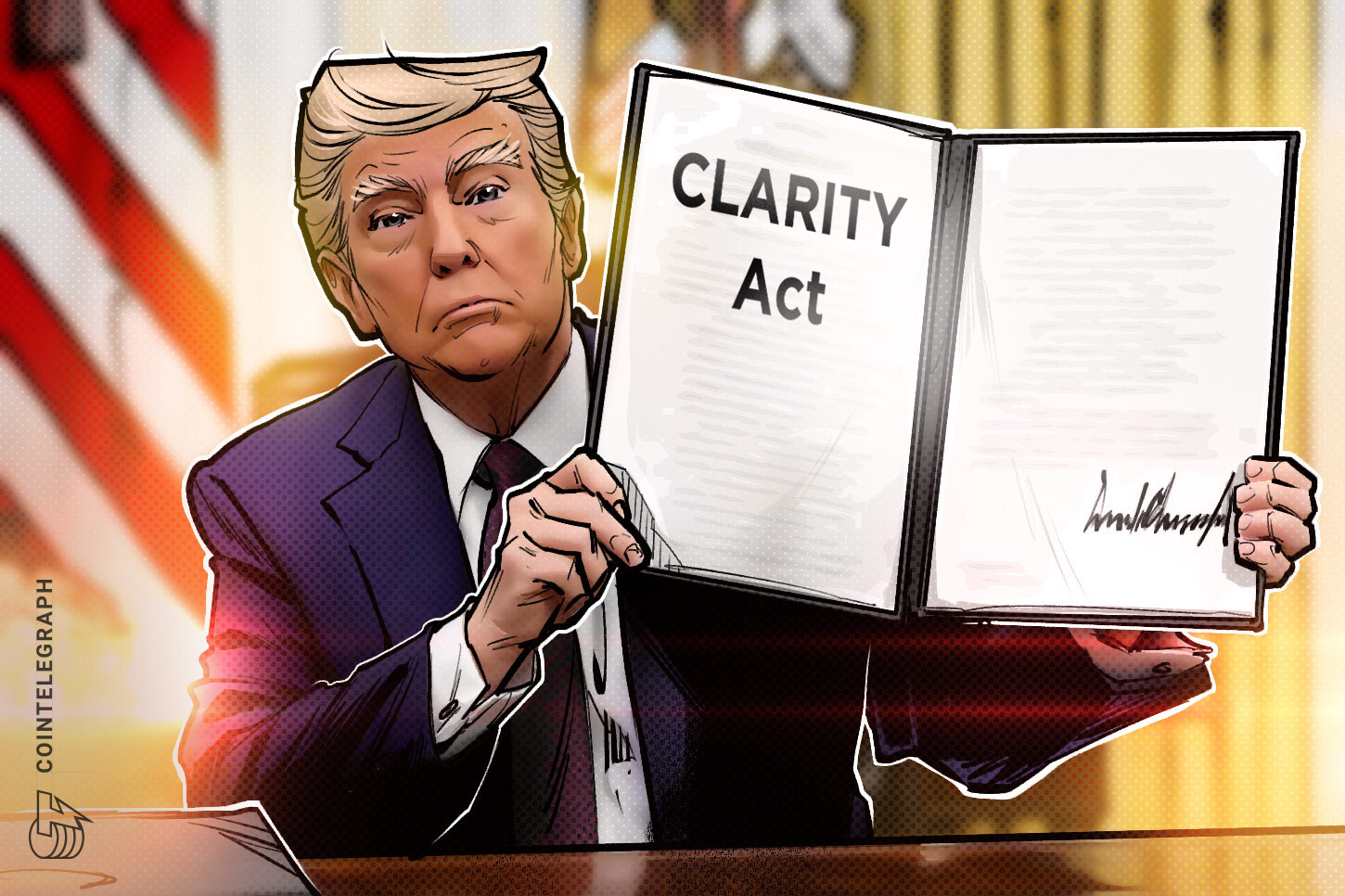
Bernstein expects ‘aggressive’ rulemaking from SEC, CFTC, following CLARITY Act failure

…The analysts said they expect agency regulations including token taxonomy for raising capital, developer protection measures concerning decentralized finance and self-custodial protocols, innovation exemptions…

Show full text (3556 chars)
Written by Zoltan Vardai staff writer Reviewed by Robert Lakin staff editor Written by Zoltan Vardai staff writer Reviewed by Robert Lakin staff editor Bernstein expects ‘aggressive’ rulemaking from SEC, CFTC, following CLARITY Act failure Latest News Published Sep 16, 2026 Bernstein said the federal agencies will publish new regulations to compensate for the time lost negotiating the CLARITY Act, after its cloture vote failed on Tuesday. Bernstein analysts expect “aggressive and swift” rulemaking from the US Securities and Exchange Commission (SEC) and Commodity Futures Trading Commission (CFTC), after the Digital Asset Market Clarity (CLARITY) Act failed to pass a Senate cloture vote on Tuesday. Bernstein analysts said the regulatory agencies will publish new regulations to “make up for the time lost negotiating the CLARITY Act,” in a Wednesday note shared with Cointelegraph. The analysts said they expect agency regulations including token taxonomy for raising capital, developer protection measures concerning decentralized finance and self-custodial protocols, innovation exemptions for equity tokenization, faster approval times for real-world asset perpetual futures, and amendments to rules around federal sports even contracts and their classification as swaps. Bernstein said that these federal agencies will bring more regulatory clarity for the industry, to compensate for the failure of the CLARITY Act, which would have “fool-proofed the industry against political regime shifts.” On Tuesday, the US Senate failed to pass a cloture motion on the CLARITY Act, which would have established the country’s first regulatory framework for digital assets. Bernstein’s analysts said that a re-vote of the act was unlikely, citing a limited time window and concerns over the bill’s ethics provisions. On Aug. 19, the SEC proposed new rules to create a “clear and fit-for-purpose framework for certain investment contracts involving crypto assets,” allowing entities to raise capital while preserving investor protections. The proposed rules offer crypto companies exemptions allowing the issuance of up to $5 million in tokens during four years and up to $75 million during 12 months, as well as a safe harbor exempting cryptocurrencies from being treated as ”investment contracts.” On July 27, SEC Chair Paul Atkins told CNBC that the agency was “ready, willing, and able to come out with rules“ on digital assets if the Senate failed to pass the CLARITY Act. Related: Deutsche Bank awaits regulatory nod to launch institutional crypto custody solutions Subscribe to daily byte-sized crypto news from Cointelegraph Subscribe Cointelegraph is committed to independent, transparent journalism. This news article is produced in accordance with Cointelegraph’s Editorial Policy and aims to provide accurate and timely information. Readers are encouraged to verify information independently. Bitcoin Regulation Law Politics Policy SEC CFTC United States Regulation More on the subject Crypto stocks slide after CLARITY Act fails to advance in Senate 16 hours ago Nate Kostar US House crypto tax package omits mining, staking reward deferral Sep 15, 2026 Ezra Reguerra US seeks $61M in USDT allegedly tied to sanctioned Iranian oil sales Sep 15, 2026 Ezra Reguerra Crypto stocks slide after CLARITY Act fails to advance in Senate 16 hours ago Nate Kostar US House crypto tax package omits mining, staking reward deferral Sep 15, 2026 Ezra Reguerra US seeks $61M in USDT allegedly tied to sanctioned Iranian oil sales Sep 15, 2026 Ezra Reguerra
merriam-webster.com News Web Result

DECENTRALIZATION Definition & Meaning - Merriam-Webster

The meaning of DECENTRALIZATION is the dispersion or distribution of functions and powers; specifically, government : the delegation of power from a central authority to regional and local authorities. How to use decentralization in a sentence.

washingtonexaminer.com News 7/10 ?

Taxing unsold crypto isn’t policy — it’s economic sabotage

…If Washington imposes an impractical tax regime on the people building decentralized networks here, it should not be surprised when that activity migrates overseas.…

Show full text (5264 chars)
For the better part of a decade, Washington has tried to force 21st-century financial technology into a tax code built for another era. The results are predictable: confusion, unnecessary compliance costs, arbitrary tax treatment, and a bureaucracy that makes ordinary people pay for Washington’s failure to keep pace. Today, buying a cup of coffee with bitcoin can create a tax-reporting obligation, moving digital assets across a network can generate taxable events, and miners and stakers can face taxes before they have even sold the assets they earned. That is not sound tax policy — it is government getting in the way of innovation. Join Washington Examiner for unlimited access to the news, analysis, and commentary that matter most. Already a member? Log in The House Ways and Means Committee now has a chance to fix it. In June, it unveiled a series of bills built around three principles: greater clarity, equal treatment with traditional financial assets, and new compliance rules. Chairman Jason Smith (R-MO) deserves credit for taking the issue seriously, and several reforms are overdue. But Congress should be equally clear about what this effort must not become: an excuse to quietly raise taxes or dress up new revenue grabs as “parity.” The strongest parts of the legislation start from a basic principle: People should not need an accountant to use digital assets. The Less Tax Paperwork for Digital Asset Owners Act would reduce the tax consequences of small network fees, simplify accounting for widely traded assets, and provide more sensible treatment for certain dollar-pegged stablecoin transactions. The federal government has no legitimate interest in forcing taxpayers to calculate microscopic capital gains on every ordinary transaction. When the potential liability is measured in pennies and the compliance burden in hours, the problem is the tax code — not the taxpayer. Tax compliance should never cost more than the tax itself. The Providing Analogous Rules for Digital Assets Act addresses another problem: Digital assets are frequently denied tax treatment that Congress already provides to economically similar activity. The legislation would let qualifying dealers and traders use mark-to-market accounting, extend existing trading safe harbors to certain foreign investors, and provide tax-neutral treatment for qualifying lending transactions. These are not special favors for crypto — they are the removal of special penalties against it. Congress already decided these rules make sense for stocks and bonds, and there is no principled reason to impose worse treatment simply because an investor uses newer technology. The biggest unresolved issue is mining and staking rewards. Congress should apply a rule that is foundational to the tax code: Tax the gain when it is realized. Yet miners and stakers can be forced to recognize ordinary income the moment newly created assets are received — even if those assets are never sold and even if their value later collapses. That approach is economically incoherent and hostile to innovation. Validators, developers, and entrepreneurs can relocate. Capital and jobs can move with them. If Washington imposes an impractical tax regime on the people building decentralized networks here, it should not be surprised when that activity migrates overseas. These rewards should be taxed when the gain is actually realized — not through a complicated compromise that preserves the problem. The legislation also proposes extending securities’ wash-sale restrictions to digital assets. There is a legitimate argument for treating economically similar investments under comparable rules. But neutrality cannot mean extending every existing restriction while calling the result reform. Wash-sale rules prevent investors from immediately recognizing certain losses when they quickly repurchase a substantially identical asset. Extending them to digital assets would limit a treatment that investors can use today and therefore raise federal revenue. Congress should be transparent about that: If digital assets are to face the same anti-abuse rules as securities, that change belongs in the broader legislation, not as a stand-alone revenue raiser. The principle should be simple: Where the tax code unfairly disadvantages digital assets, remove the disadvantage. Where Congress adds new restrictions in the name of parity, pair them with meaningful relief. Modernization should leave taxpayers better off, not hand Washington another excuse to collect more. HIT THE GAS ON AMERICA, SLAM THE BRAKES ON WASHINGTON: HOW TRUMP LEADS REPUBLICANS TO VICTORY Digital assets are no longer a theoretical experiment; they are becoming part of the financial system. The United States now has a choice: modernize its tax code to reflect that, or keep forcing new technologies through rules written for a different economy . The right approach is a tax code that taxes actual economic gains, treats comparable activity consistently, and lets innovation compete on its merits. Congress has a real opportunity to write the tax rules for the future of finance. It should take it. David McIntosh is president of the Club for Growth. He served as a Republican representative from Indiana from 1995 to 2001.
Decrypt Markets 7/10 ?

FCA Guidance Lands Two Weeks Before UK Crypto Authorization Window Opens

…That consultation covers UK qualifying stablecoins , proprietary trading and market making, certain technology providers, decentralized protocols, safeguarding arrangements involving central securities…

Show full text (5003 chars)
In brief Crypto firms can apply for UK authorization from September 30 to February 28, 2027, ahead of the regime taking effect on October 25, 2027. Overseas firms dealing, arranging or safeguarding for UK retail customers are caught, with no overseas persons exclusion available. Missing the February deadline costs firms the transitional cover that lets them keep operating while their application is assessed. Britain's Financial Conduct Authority has told crypto firms how its incoming rulebook applies to them, publishing perimeter guidance on Wednesday, two weeks before applications for authorization open. The guidance covers issuing qualifying stablecoins, running trading platforms, dealing and arranging deals, safeguarding cryptoassets and arranging staking, and sets out which activities need FCA approval. The application window runs from September 30 to February 28, 2027, and the regime itself takes effect on October 25, 2027. "This guidance gives firms the clarity they've asked for so they can prepare with confidence," said David Geale, the FCA's executive director of consumers, payments and competition. A wide catchment area The rules reach well beyond British-based companies. Parliament extended its territorial scope so that overseas firms dealing with, arranging for or safeguarding cryptoassets for UK retail consumers count as carrying on business in the UK, said Michelle Kirschner, a partner at Gibson Dunn, and the overseas persons exclusion that firms normally rely on "is simply not available for these activities." Two limits apply, with purely institutional business from overseas largely untouched, as well as firms reaching UK consumers only through a UK-authorized dealer or trading platform. "The policy intent is clear," Kirschner said. "If a firm wants direct access to UK retail customers, it must come onshore and get authorised." The February deadline matters more than it looks. Applying inside the window triggers statutory saving provisions that let a firm keep operating while the FCA assesses it, said Thomas Brown, a partner at Shoosmiths. Miss it and the application is still accepted, but without that cover a firm not yet authorized by October 2027 is "likely to be restricted to servicing existing contractual arrangements and may be unable to onboard new customers or enter into new business." Until permissions are granted to commence on October 25, 2027, existing money laundering registrations and the financial promotions regime continue to govern. "It will not be the case that anyone will be authorised early," Kirschner said, though early application does afford additional preparation time. Brown cautioned that firms should avoid treating February 2027 as a "target date rather than a deadline." What remains open The government has amended the underlying legislation to add targeted exclusions and clarifications, and the FCA will consult in October on how the guidance should change. That consultation covers UK qualifying stablecoins , proprietary trading and market making, certain technology providers, decentralized protocols, safeguarding arrangements involving central securities depositaries, and financial promotions. When the FCA finalized its rulebook in June, it said the regime would reach DeFi where there is an "identifiable controlling entity," a term neither the legislation nor the regulator has defined. Brown listed what is likely to count, including a foundation or company controlling development, a team with authority to ship upgrades, anyone able to change core parameters, DAO participants with concentrated governance power, entities holding treasury assets, operators of user-facing interfaces, and anyone deriving commercial benefit from the protocol. But the FCA has declined to publish worked examples, insisting on case-by-case assessment. The hardest questions, including what happens when several parties could each qualify, "have been deferred by the FCA rather than resolved," Kirschner said, though she noted it "reflects a genuinely difficult perimeter problem that no major jurisdiction has yet cracked." Legislation was set out in February, the FCA consulted in April, rules were finalized in June, perimeter guidance arrived this week, the gateway opens this month, and the regime commences in just over a year. The Bank of England, which will supervise systemic stablecoins, replaced individual holding caps with a £40 billion issuance limit in June. The FCA's announcement dropped a day after the U.S. Senate declined to advance the Clarity Act , leaving oversight in America to what Kirschner called "an agency-by-agency patchwork that a future administration can rewrite." Britain has a statute, a rulebook, guidance and a fixed commencement date, she noted, meaning that "for boards making multi-year decisions about where to build, that certainty is worth a great deal." Brown expects the result to be "a market divide," with firms chasing institutional credibility and banking relationsh...
CoinTelegraph Markets 7/10 ?

AI has been a ‘net negative’ for crypto: Phemex CEO

…He also warned that the AI threats could make self-custody and decentralized finance less appealing.…

Show full text (4551 chars)
Written by Felix Ng staff editor Reviewed by Bryan O'Shea staff editor Written by Felix Ng staff editor Reviewed by Bryan O'Shea staff editor AI has been a ‘net negative’ for crypto: Phemex CEO Latest News Published Sep 16, 2026 Federico Variola says AI has diverted capital from crypto and is empowering attackers, while rising cybersecurity costs could push the industry toward greater centralization. Phemex CEO Federico Variola says AI has been a ‘net negative’ for crypto, despite the crypto exchange announcing an AI-focused transformation earlier this year. Speaking on Cointelegraph’s Chain Reaction, Variola said AI has diverted capital away from the industry, while empowering attackers and driving up cybersecurity costs for smaller teams — pressures that risk pushing crypto toward greater centralization. “It’s difficult to be bullish about AI in crypto,” he said. “Liquidity have been significantly diverted to to that industry on one side. On the other hand, AI has empowered a lot of bad actors that have been exploiting protocols.” “It’s difficult to envision a world in which AI is going to favor crypto specifically as an industry, since a lot of the fixes that we see actually encourage more centralization rather than less centralization.” Variola’s assessment offers a skeptical view of AI’s impact on crypto. It also comes after his crypto exchange announced an AI transformation in February, when he outlined plans to embed the technology across product development and internal operations, though his latest views focused on the broader crypto industry. AI raises stakes for crypto security Variola’s take also comes as AI has been linked to recent crypto exploits. In July, attackers drained roughly $116 million in Bitcoin from more than 5,200 addresses affected by a Coldcard hardware wallet flaw that is widely believed to have been discovered through the malicious use of AI. Coinkite CEO Rodolfo Novak warned developers at the time that the “sober reality” is that AI-assisted code review can now uncover bugs that outpace the industry’s most seasoned experts. “AI has empowered a lot of bad actors that have been exploiting protocols, whether with social engineering or… finding vulnerabilities,” said Variola, adding that small teams working on protocols will no longer operate without a massive cybersecurity budget. He also warned that the AI threats could make self-custody and decentralized finance less appealing. “As AI becomes more pervasive, and whether it is your devices being hacked or social engineering, or all these kinds of strategies that are empowering threat actors, that makes DeFi a lot less appealing for a retail user because you have to worry about so many things that you didn’t have as much before.” On the other hand, security experts have also highlighted AI’s defensive potential . CertiK senior blockchain investigator Natalie Newson told Cointelegraph in April that “AI can also be one of the biggest defenses,” even as she warned that the technology was making attacks more sophisticated. Despite his assessment of AI’s overall impact, Variola said he sees practical benefits with AI agents, specifically to help investors build a portfolio or help them make better trading decisions. However, Variola said he did not expect AI agents to fully replace human trading decisions. “At the end of the day, still it will be up to the user to make the final decision. So I don’t think that agents will ever replace that action of taking the trade.” Magazine: Why are AI’s biggest companies suddenly asking to slow down? Subscribe to daily byte-sized crypto news from Cointelegraph Subscribe Cointelegraph is committed to independent, transparent journalism. This news article is produced in accordance with Cointelegraph’s Editorial Policy and aims to provide accurate and timely information. Readers are encouraged to verify information independently. Hacks AI Cybersecurity Bot Trading Cryptocurrency Exchange AI & Hi-Tech More on the subject Why are AI’s biggest companies suddenly asking to slow down? Sep 14, 2026 Christina Comben King Charles to host AI chiefs amid industry call to slow development Sep 14, 2026 Felix Ng Anthropic chief urges slowdown in AI development to safer pace Sep 13, 2026 Michael Millard Why are AI’s biggest companies suddenly asking to slow down? Sep 14, 2026 Christina Comben King Charles to host AI chiefs amid industry call to slow development Sep 14, 2026 Felix Ng Anthropic chief urges slowdown in AI development to safer pace Sep 13, 2026 Michael Millard
CoinTelegraph Markets 7/10 ?

US charges ex-Robinhood engineers over alleged pre-listing crypto trades

…in 2023, in which a former employee used confidential information to profit from listings of new tokens by directly buying the underlying asset, though the Robinhood case extends the issue into decentralized

Show full text (4235 chars)
Written by Ezra Reguerra staff writer Reviewed by Felix Ng staff editor Written by Ezra Reguerra staff writer Reviewed by Felix Ng staff editor US charges ex-Robinhood engineers over alleged pre-listing crypto trades Latest News Published Sep 16, 2026 The former employees allegedly earned more than $50,000 each by trading Hyperliquid perpetuals ahead of Robinhood token listings. US prosecutors on Tuesday charged two former Robinhood engineers with commodities fraud and wire fraud for allegedly using confidential information about upcoming cryptocurrency listings to profit from perpetual futures trades on Hyperliquid. According to the US Department of Justice (DOJ), Hefu Chai and Huaisong “Jerry” Xiang bought perpetual contracts linked to tokens ahead of Robinhood Crypto listings. The DOJ alleged each profited more than $50,000 from the trades between 2025 and 2026. The DOJ said Chai and Xiang had access to a private company Slack channel containing information about planned listings. Prosecutors allege they used that information to open long positions on Hyperliquid, closing them when their value increased after their debut on Robinhood. The allegations have parallels to the Coinbase insider-trading case in 2023, in which a former employee used confidential information to profit from listings of new tokens by directly buying the underlying asset, though the Robinhood case extends the issue into decentralized derivative markets. Cointelegraph contacted Robinhood for comment but did not receive a response by the time of publication. Robinhood barred employees from trading around listings According to the DOJ’s complaints, Chai worked at Robinhood from around 2021 until May 2026 and served as a technical lead responsible for new digital-asset listings. Xiang worked there from around 2024 until September 2026 as a software engineer involved in crypto listings. Robinhood designated both engineers as “Coin Aware Individuals,” giving them access to a private Slack channel containing planned listing dates, according to the complaints. The company’s policy prohibited members of the group from trading on Robinhood or any other platform 24 hours before or after a listing or delisting announcement. Prosecutors allege Chai traded perpetuals ahead of at least 10 announcements involving tokens including Cat in a dogs world (MEW), Moo Deng (MOODENG), Aster (ASTER), Plasma (XPL), Hyperliquid (HYPE), Ethena (ENA) and Aerodrome Finance (AERO). Xiang allegedly first traded Popcat (POPCAT) perpetuals in March 2025 before trading ahead of at least 10 other listing announcements. Related: US prosecutors drop OpenSea NFT fraud case after appeals court reversal US Attorney Jamie McDonald said corporate insiders cannot evade securities and commodities laws by trading misappropriated information through perpetual futures, tokenized securities or similar instruments. Each defendant faces one count of violating the Commodity Exchange Act, which carries a maximum prison sentence of 10 years, and one count of wire fraud, which carries a maximum of 20 years. The charges against Chai and Xiang remain allegations, and both defendants are presumed innocent unless convicted. Magazine: HYPE price could suffer as Binance takes its revenue: Alice Liu Subscribe to daily byte-sized crypto news from Cointelegraph Subscribe Cointelegraph is committed to independent, transparent journalism. This news article is produced in accordance with Cointelegraph’s Editorial Policy and aims to provide accurate and timely information. Readers are encouraged to verify information independently. Law United States Department of Justice Robinhood Scams & Cybercrime More on the subject Symbiosis says recovered 15 BTC from bridge hack, offers 20% bounty Sep 14, 2026 Zoltan Vardai Revolut attackers threaten daily customer data leaks Sep 14, 2026 Felix Ng Brevo login flaw enabled phishing email targeting 347K Trezor subscribers Sep 11, 2026 Ezra Reguerra Symbiosis says recovered 15 BTC from bridge hack, offers 20% bounty Sep 14, 2026 Zoltan Vardai Revolut attackers threaten daily customer data leaks Sep 14, 2026 Felix Ng Brevo login flaw enabled phishing email targeting 347K Trezor subscribers Sep 11, 2026 Ezra Reguerra
dig.csail.mit.edu News Web Result

Decentralized Information Group

Solid : Solid (derived from "social linked data") is a proposed set of conventions and tools for building decentralized social applications based on ...

medium.com News Web Result

The Meaning of Decentralization - Medium

Now, consider the two answers on Quora for “what is the difference between distributed and decentralized”. The first essentially parrots the above diagram, whereas the second makes the entirely different claim that “distributed means not all the processing of the transactions is done in the same place”, whereas “decentralized means that not one single entity has control over all the processing”. Meanwhile, the top answer on the Ethereum stack exchange gives a very similar diagram, but with the words “decentralized” and “distributed” switched places!