What Godzilla can teach us about Donald Trump
He tramples things without intending to. He was created by us. He never permanently goes away. In recent years, metaphorical representations of Donald Trump as the Japanese kaiju Godzilla have become ...

Research, Space & Discovery
He tramples things without intending to. He was created by us. He never permanently goes away. In recent years, metaphorical representations of Donald Trump as the Japanese kaiju Godzilla have become ...
It could go either way, depending on the relationshipThe postDoes Having a Pet Really Improve Our Health?appeared first onNautilus.
A stunningly intact marine reptile named Austronaga minuta that lived around 245 million years ago may have looked like a miniature version of more famous later ocean predators, like plesiosaurs
Novo Nordisk Must Defend Shareholder Fraud Claims Over CagriSema Trial Disclosures
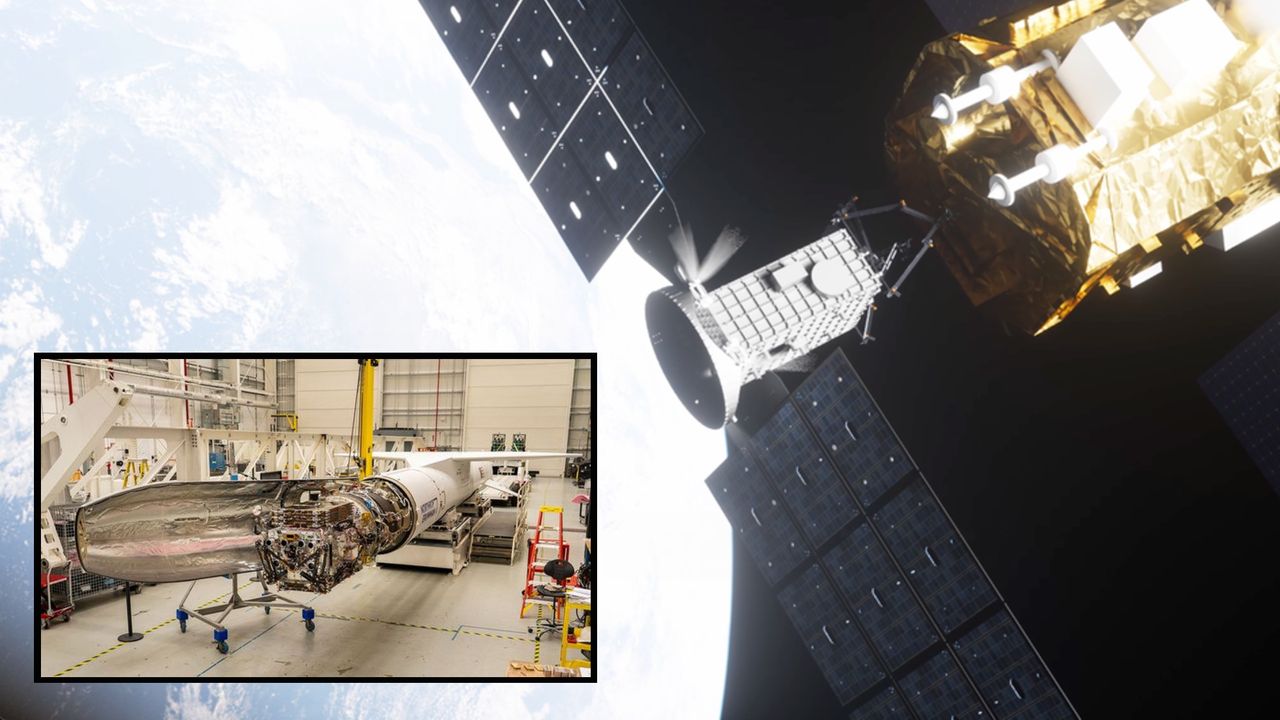
NASA launched the Swift Boost mission earlier this month to try and save one of its aging science observatories, but the rescue spacecraft is now experiencing control issues.
Why do humans keep pets? A new international study suggests that some of the behavioral foundations of human-animal companionship may have much deeper evolutionary roots than previously thought.
Next-Generation HIF-2? Inhibitor Casdatifan Shows Encouraging Early Activity in Advanced Kidney Cancer—but Confirmation Awaits Phase III Trials
A new study on how rising temperatures will affect rice production in Science Advances compares 214 observations from field-warming experiments with seven crop models, revealing modeled estimates for ...
Forest trees growing in air containing higher levels of carbon dioxide (CO2) radically change the way they "cycle" nitrogen, a key plant nutrient, with implications for forests as a nature-based clima...
Scientists from China, Europe and the U.S., including Dr. Stephan Spiekman, a paleontologist at the State Museum of Natural History Stuttgart and the University of Hohenheim, have described a fossil o...
Extreme urban flooding is a growing challenge under climate change, threatening residents, infrastructure and urban systems. However, traditional emergency planning often relies on static population d...
People described as "problematic" internet users report higher stress, worse mood and greater neglect of other activities than those who surf the web sparingly, according to a study published in PLOS ...
For decades, scientists have largely relied on painstaking trial and error to coax proteins into crystalline forms. Crystallization enables scientists to determine the molecular structures of proteins...
It is a mystery that has puzzled scientists for years. How can the world's only winged mammals carry viruses that cause severe disease while rarely becoming seriously ill themselves?
Ex-captive elephants released into the wild adapt well to wild environments, according to a study published July 29, 2026, in the journal PLOS One by Tenisha Roos and Tamara Eggeling of the Elephant R...
Extant and ancient cephalopods—including octopuses, squids, extinct ammonites, cuttlefish and nautiluses—have all had to solve the problem of buoyancy, whether they have hard external shells or not.
Wetland restoration is often promoted as a definitive way to support wildlife, improve water quality and help store carbon. However, new research from McGill University suggests the overall climate pi...
As NASA's Curiosity rover recently began climbing a Martian valley nicknamed "Valle Grande," it sent back images that were a familiar sight to mission scientists: honeycomb-like textures called polygo...
Nepal's tiger population has risen by roughly 20% in the past four years to an estimated 429, officials said Wednesday, a conservation milestone despite challenges from human-wildlife conflict.
Scientists have discovered a previously unknown law of geometry that explains why some growing surfaces, whether in nature or in engineered materials, suddenly stop being able to stay smooth and inste...