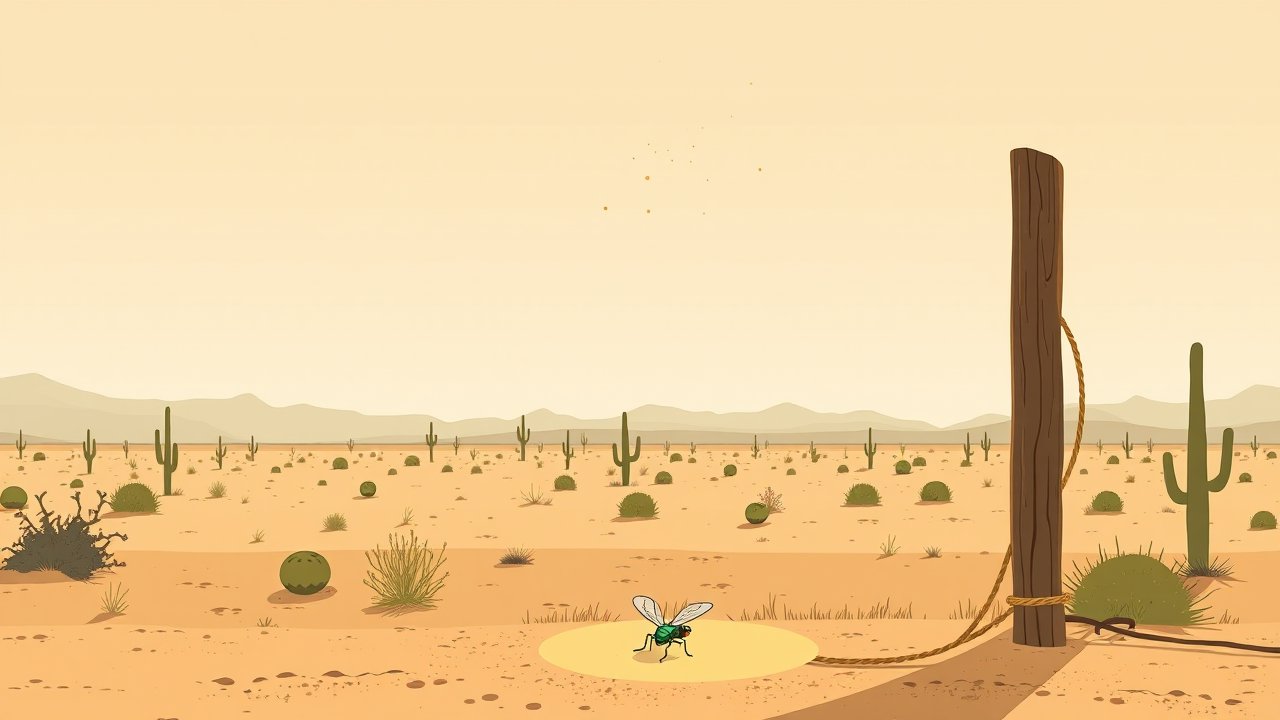
Federal officials have confirmed New World screwworm in a dog in Cochise County, Arizona, along the Mexican border, the first detection of the parasite in the state. The U.S. Department of Agriculture's Animal and Plant Health Inspection Service announced the case on Wednesday, October 28. A local veterinarian examined the dog on the evening of October 26 and found "a wound on the canine's back heavily infested with maggots," the Arizona Department of Agriculture said; a federal laboratory in Ames, Iowa, confirmed the species, and the dog is under veterinary care. Arizona is the third state in the current U.S. outbreak, after Texas and New Mexico. The parasite "affects livestock, pets, wildlife, and, less commonly, people," the USDA said.
What screwworm is and what happens now
New World screwworm is a fly that lays its eggs in open wounds or in the nostrils, eyes or other body openings of warm-blooded animals. Unlike most maggots, its larvae feed only on living tissue, the Arizona Game and Fish Department said, and the larvae "can cause severe wounds, animal suffering, and significant economic impacts if not detected and treated quickly," according to the USDA. Federal and state officials have set up a 20-kilometer, or about 12-mile, "infested zone" around the case, an area where animals can be moved only under restrictions and inspections, and are increasing surveillance and trapping. The response also includes releasing sterile male flies, which mate with wild females without producing offspring, a technique designed to interrupt the parasite's reproductive cycle, AGDAILY reported. AGDAILY reported that a sterile-fly plant operated in Douglas, in Cochise County, from 1963 to 1983, and that federal officials recently committed $25 million to expand sterile-fly dispersal in the area. "We have been preparing for this possibility for a long while and are acting swiftly," said Arizona State Veterinarian Ryan Wolker.
How far it has spread
As of Wednesday, the USDA's tracking dashboard listed 71 confirmed U.S. cases since June, 18 of them active, with 19 recorded in October so far compared with three in September, AGDAILY reported. Recent New Mexico cases include a sheep on the New Mexico State University campus in Las Cruces and cattle in Doña Ana and Luna counties, and the first U.S. wildlife case of the outbreak was an elk shot by a hunter in Pecos County, Texas.
The outbreak has also disrupted cattle trade. The USDA suspended imports of Mexican livestock in November 2024, briefly resumed them in February 2025 and halted them again in May 2025 as the parasite moved north; the trade historically brought about 1 million Mexican cattle into the United States each year. The agency has been reopening border ports in stages this year: Douglas, Arizona, on August 24, Santa Teresa, New Mexico, on September 24, and Columbus, New Mexico, on October 26, even as new cases emerged. Federal officials say stronger inspections, surveillance and quarantine procedures are allowing trade to resume while keeping protections in place, and the USDA has said the Nogales, Arizona, port could reopen to cattle on November 30 if animal health conditions and inspection safeguards allow, AGDAILY reported. The import restrictions have added pressure to a tight U.S. cattle supply, though herd reductions and other factors have also contributed to record-high retail beef prices, AGDAILY noted.
Anyone who finds a wound with maggots on a live animal should report it: in Arizona, domestic animals to the state Department of Agriculture at [email protected] or 602-542-4293 (weekdays 8 a.m. to 5 p.m.), and wildlife to Arizona Game and Fish at 623-236-7201. The USDA posts confirmed cases daily at screwworm.gov.
This article reflects reporting through Friday afternoon, October 30, 2026. Sources: USDA Animal and Plant Health Inspection Service, announcement, October 28; Arizona Department of Agriculture, news release; Arizona Game and Fish Department, news release, October 29; AGDAILY, "Screwworm reaches Arizona as cases spread across Southwest", October 29, and on the Columbus port, October 27.