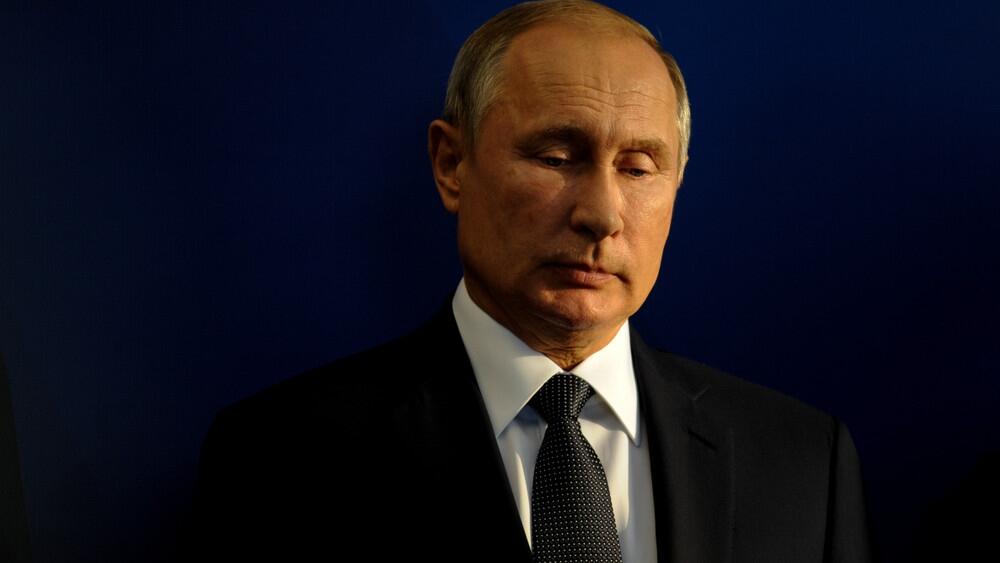
Venezuela's interim president, Delcy Rodríguez, said in a recorded address on Thursday, October 29, that she has ordered a valuation of "non-essential" state assets so they can be offered to private investors or handed back to former owners. "I have instructed that non-essential assets held by the state be assessed to determine which can be offered to the private sector or returned to their former owners. This process is already well advanced," she said, in Reuters' translation; she added, as transcribed by the Caracas daily Últimas Noticias, "La propiedad privada es un derecho protegido y garantizado por nuestra Constitución" (Private property is a right protected and guaranteed by our Constitution). It is an instruction to her own government, not a decree or a law: Reuters reported that she "did not provide further details on how the process may be carried out," and Colombia's El Tiempo noted that she named no assets, numbers or dates. In Infobae's report on the speech, the economist José Manuel Puente, a member of Venezuela's National Academy of Economic Sciences, said: "Los mismos que destruyeron el país, no tienen la credibilidad y competencia para reconstruirlo" (The same people who destroyed the country have neither the credibility nor the competence to rebuild it). Translations from Spanish are Profoundd's unless credited.
Rodríguez, Nicolás Maduro's vice president, has been acting president since U.S. forces captured Maduro in Caracas on January 3, an operation she has called a kidnapping, and was sworn in on January 5, Al Jazeera reported. The Supreme Court had ordered her to assume the interim presidency, MercoPress reported, in a ruling whose constitutional basis the rights group Provea disputes. Opposition leader María Corina Machado held her first press conference since returning to Venezuela later the same day; none of the six accounts of it that Profoundd read records a comment on the asset announcement. Of Rodríguez's separate promise of elections, Machado said, "Los venezolanos ya sabemos quién es quién," and "me parece muy bien que la señora Delcy Rodríguez haya dicho hoy que va a haber elecciones" (We Venezuelans already know who is who; I think it is very good that Mrs. Delcy Rodríguez said today that there will be elections), El Nacional reported.
What was ordered
The instruction continues the work of a commission Rodríguez announced on April 8 and installed on April 22, Banca y Negocios reported. EFE reported that it would sort state holdings into four groups: assets wholly owned by the state, assets with private participation, assets to be reviewed for "qué bienes no son en realidad necesarios para los procesos estratégicos del Estado" (which are not really necessary for the state's strategic processes), and assets to be liquidated; Rodríguez said the aim was "agilidad y modernidad" (agility and modernity) in state processes. Its private-sector representative, Luigi Pisella, a former president of the industrial chamber Conindustria, said in August that firms nationalized under Hugo Chávez should go back to their former owners or otherwise be sold, Venezuelanalysis reported.
The anti-corruption group Transparencia Venezuela wrote in May that the government is pursuing privatization without, among other standards, "transparencia sobre las condiciones y criterios de decisión de la venta de activos" (transparency on the conditions and criteria for deciding asset sales). In April Rodríguez said hydrocarbons were excluded from the review, Valora Analitik and Diario Panorama reported; Reuters' October 29 account instead says the commission covers "infrastructure in key industries such as energy, power and mining." No list of assets has been published.
Which sectors are open
Two sector-level laws have been enacted this year. The January 29 hydrocarbons reform, the Associated Press reported, promises private companies control over the production and sale of oil and allows independent arbitration, while "ownership of the hydrocarbon reservoirs on which a company will carry out activities remains vested in the state." A new Organic Mining Law, published in the Gaceta Oficial on April 16, keeps the state's power to reserve minerals but lets them be granted in mining contracts to private or mixed companies at the ministry's discretion, according to Transparencia Venezuela's May report (Profoundd did not read the law's text). On the chavista left, the Communist Party of Venezuela called the oil reform "un retroceso histórico" (a historic step backward); answering such criticism, Rodríguez and her brother Jorge, the National Assembly president, have said Venezuela must put the world's largest proven reserves to work for its development, BBC Mundo reported.
Rodríguez said on October 29 that 61 oil contracts have been signed under the new law and 44 are being negotiated, and, in Reuters' translation, that "important negotiations are under way in the mining sector, specifically regarding gold, aluminum and iron"; Reuters noted the government has given no details of the 61.
"Returned to former owners": the record
In October 2025, before Maduro's removal, Finanzas Digital reported, citing business sources, that "no hay privatización ni devolución a antiguos dueños, solo traspaso en concesión" (there is no privatization or return to former owners, only transfer under concession), for five to twenty years. One source, who asked not to be named, said only companies whose expropriation had been completed and whose owners had been compensated would be transferred: "Hoy, el legítimo dueño es el Estado" (Today the legitimate owner is the state). The paper counted one publicly known return, the Sambil La Candelaria mall in 2022. The Chávez-era seizures left "more than a dozen international arbitration claims, which mostly remain unsettled by the government," Reuters reported, and the International Business Times noted reports as late as August of obstacles for Venezuelans trying to reclaim confiscated houses.
The opposition's terms
Machado said on October 29 that "el punto aquí no es si queremos o no inversión, por supuesto que queremos inversión, sino cómo y con quién" (the point is not whether we want investment; of course we do; it is how and with whom), El Nacional reported. She promised to honor legally signed contracts and to offer public tenders, Cambio Colombia reported, and said of the U.S.-backed NABEP oil agreement, "No he visto el contrato, ningún venezolano lo ha hecho" (I have not seen the contract; no Venezuelan has), Martí Noticias reported. Profoundd found no formal statement on the asset announcement from Fedecámaras, Conindustria or Consecomercio in Spanish- and English-language web searches and the feeds or front pages of ten Venezuelan outlets, checked between 18:40 and 19:00 UTC on October 30, about a day after the speech; Fedecámaras' treasurer, Celso Fantinel, in remarks mostly on wages and labor law published October 30 by AlbertoNews, listed expropriations among "casos que están abiertos" (open cases).
Who governs, and what Washington wants
The Supreme Court's ruling calls Maduro's removal an "ausencia forzosa" (forced absence) and states that swearing Rodríguez in did not definitively decide whether his absence is temporary or permanent, El País reported; Provea said in April that the term "no existe en la Constitución" (does not exist in the Constitution), and that at 180 days the National Assembly "tiene la obligación" (is obliged) to declare the absence permanent, a point El País put, in theory, at July 5. Washington recognizes Rodríguez as head of state and lifted sanctions on her in April, MercoPress reported. A senior State Department official told reporters on October 26, in a briefing whose transcript the department published, that once a new Supreme Court and electoral council are seated, "Delcy will have to declare a vacancy in the presidency, a permanent vacancy," which the official said triggers a six-month period for elections. The official added that economic reform must accompany the political process so that an elected government does not "inherit an economic apocalypse." Profoundd found no U.S. government statement on the asset announcement on the State Department's and Treasury's release pages or in news searches checked between 18:40 and 19:00 UTC on October 30.
Checking the headline
"Venezuela to De-Nationalize Some Sectors" is right about the direction and broadly right about "some sectors," but runs ahead of what happened on October 29. Nothing was de-nationalized that day: Rodríguez ordered a valuation of assets, with no list, decree or timetable. The sector-level openings came earlier in the year, in the oil and mining laws, and both keep the state's hold on the underlying resources. Reuters' own reading is that the move "could reverse widespread nationalisations ordered by former President Hugo Chavez"; a CNN en Español analysis called it not a sudden break but "la consolidación de un viraje que ya estaba en marcha" (the consolidation of a shift already under way). Whether former owners get anything back under this instruction is, so far, untested.
This article reflects reporting through Friday afternoon, October 30, 2026. Sources: Últimas Noticias; Reuters via BusinessDay; El Tiempo; Infobae, October 30; Al Jazeera, January 5; MercoPress; El Nacional on the address and on the press conference; Cambio Colombia and Martí Noticias on the October 29 press conference; Banca y Negocios; EFE via El Día; Venezuelanalysis; Transparencia Venezuela, May 2026; Valora Analitik; Diario Panorama; the Associated Press via PBS NewsHour; BBC Mundo via Acento; Finanzas Digital, October 2025; International Business Times; AlbertoNews; El País via Primicias; the U.S. State Department's briefing transcript, October 26; CNN en Español.